Cardinal Piaggi’s rooms
Enter the roomEight named entries and one unfilled position survive in the community catalogue. Several linked reproductions have version or attribution problems, noted below. This is not a complete wall-by-wall survey.
A house of borrowed pictures
Walk through the rooms, follow a repeated subject, or look closely at one work. This catalogue connects the game’s pictures with their artists, materials and real collections.
The current survey covers the named community inventories and additional walkthrough evidence. It is extensive, not a claim that every frame in every episode has been identified. Unresolved rooms and versions remain visible. Interpretations are editorial; plot solutions and ending revelations are omitted.
Read the essay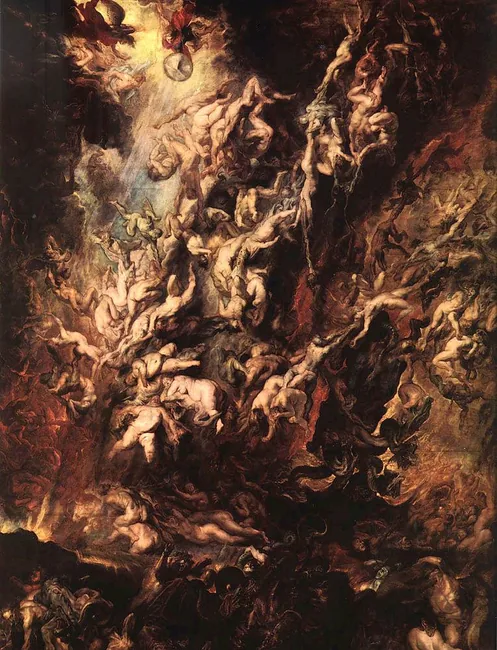
An inventory of identified compositions; the room notes record the limits of the available evidence.
01
Eight named entries and one unfilled position survive in the community catalogue. Several linked reproductions have version or attribution problems, noted below. This is not a complete wall-by-wall survey.
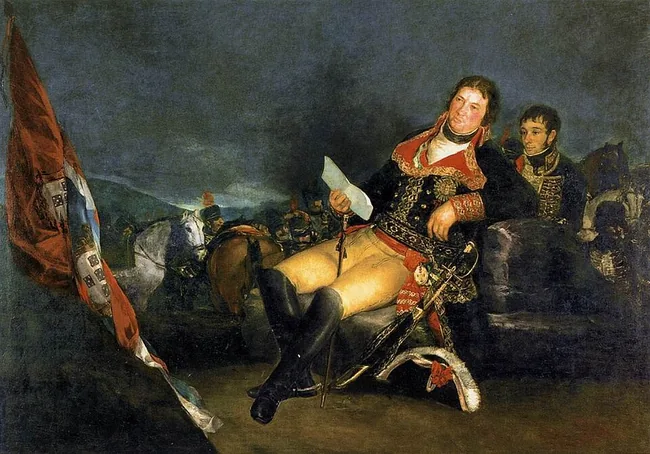
Seven named community entries. The linked Charles IV image is a probable copy after Goya, not securely an autograph painting by him.
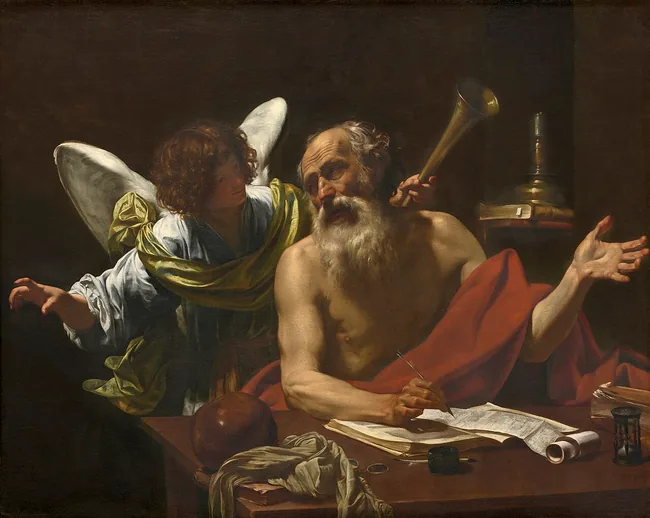
Nine named community entries. The listed Conversion is the Cerasi horse composition; the separately documented first version is placed in the tower. Exact room footage remains desirable.
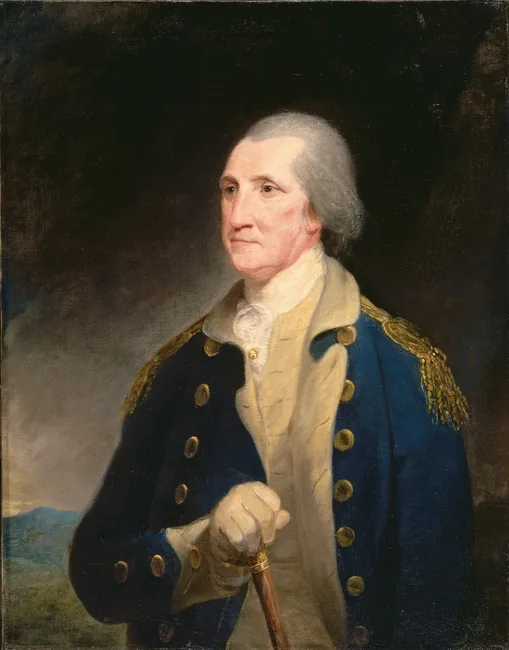
Only two named entries have been recovered. The Assereto composition’s present collection and date remain unresolved.
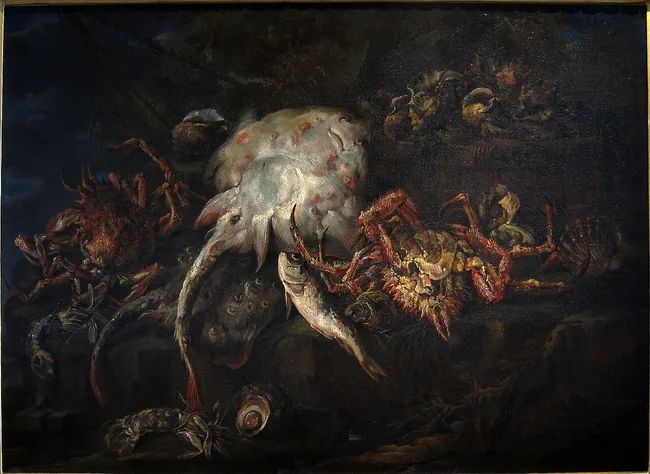
Five named entries. One emblem has no secure identification, and one alchemist image is a copy after Teniers. The shared Boselli still life also appears beside the service stairs.
No full inventory or reliable view of the Hannibal picture was recovered. A generic reproduction is deliberately not substituted.
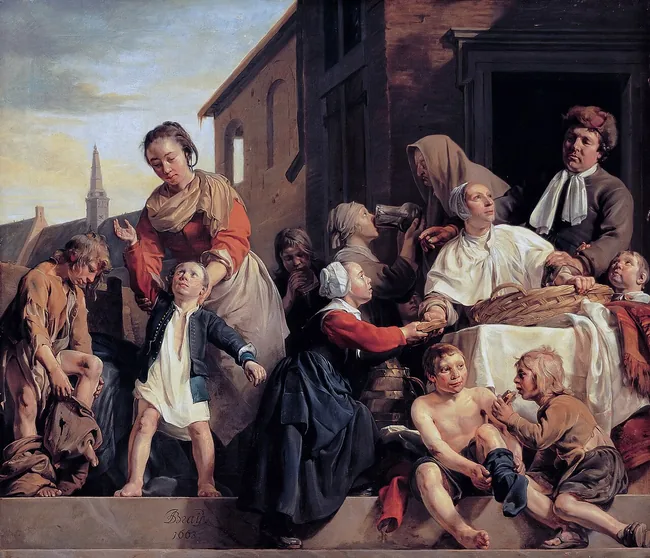
Partial inventory from retail gameplay. The George III version and a separate small tabletop portrait remain unidentified; additional frames may still be missing.
Room included in the coverage map; no verified artwork list yet.
Room included in the coverage map; paintings still to be identified.
A room and its pictures must first be established from gameplay. This entry records the limit of the current survey.
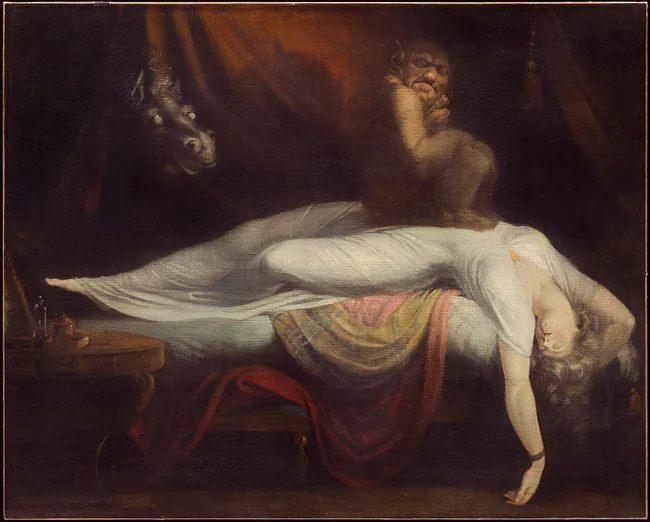
Seven source compositions are identified here. The ceiling match comes from the environment artist's portfolio; the fictional ancestor portrait adapts Veronese's Agostino Barbarigo and appears to alter the face. Puzzle dates and solutions are omitted.
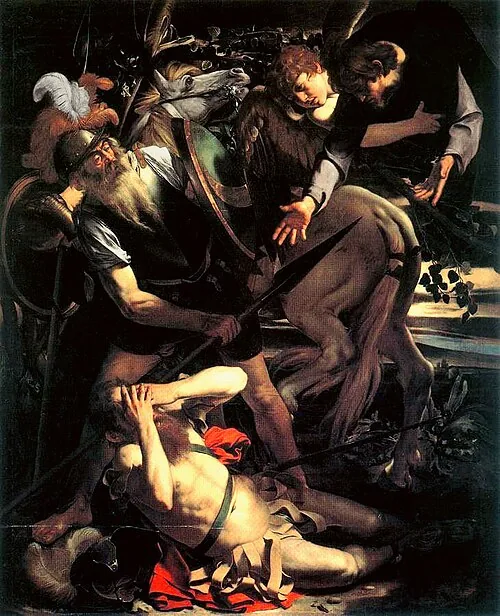
Five works are identified: Caravaggio's first Conversion of Saint Paul, three evangelists by Guido Reni now at Bob Jones University, and Reni's Saint Paul from the Prado. Reni's Saint Luke has not been verified in the game; no puzzle solutions are reproduced.
Four named entries; the catalogue does not establish that every frame in the hall has been recorded.
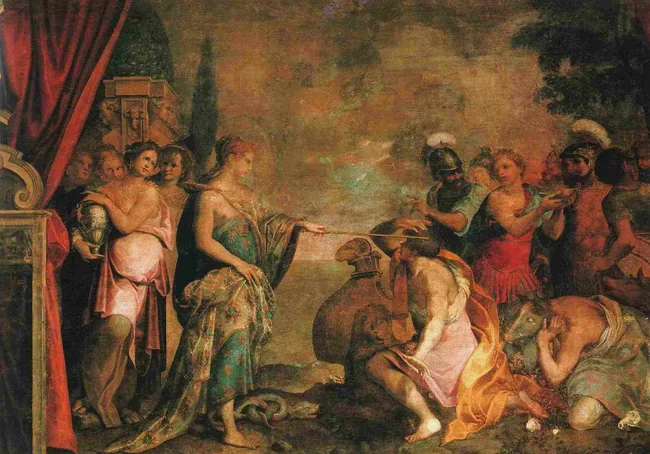
Seven named entries. One work attributed to Hippolyte-Casimir Gourse remains poorly documented; Melissa should not be silently renamed Circe.
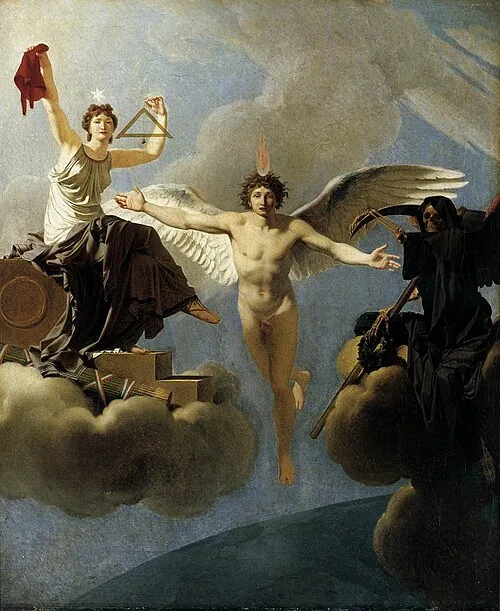
Thirty-four community-listed works. Several artist names and creation dates have been corrected against museum sources; exact game versions remain qualified where necessary.
The community page contains one named work and two unfinished rows. One row links a Charles Lacroix landscape with fishermen, but that identification still needs a visual check.
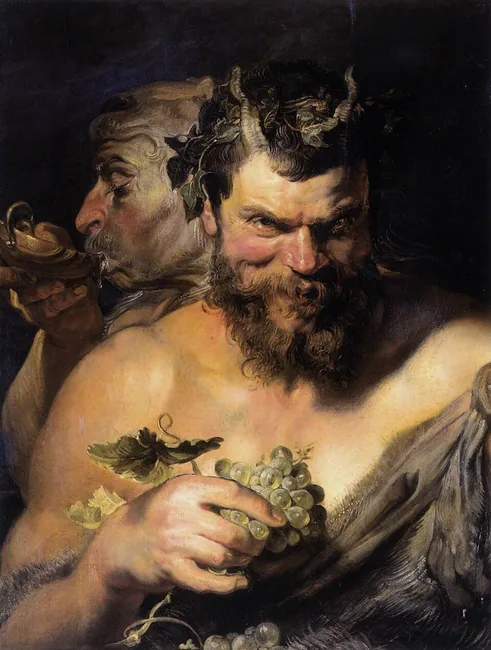
One named entry has been recovered; this does not establish that the salon contains only one painting.
02
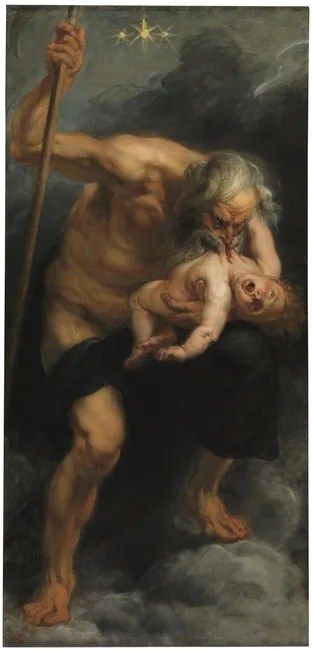
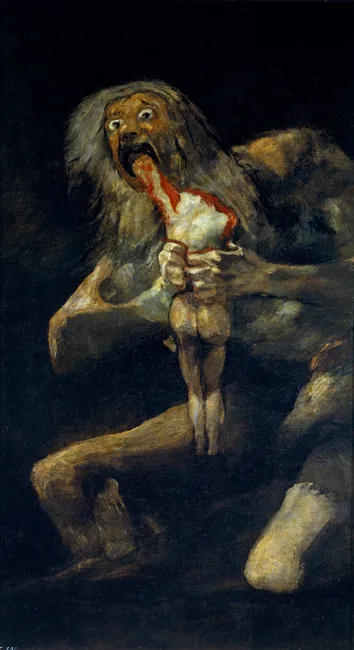
Both painters show the god devouring his child. Rubens places the action in a legible mythological world: a powerful aged body, open sky and attributes that locate the story. Goya strips away much of that explanatory setting; darkness and the fixed stare make the violence feel immediate and unstable.
Read the comparison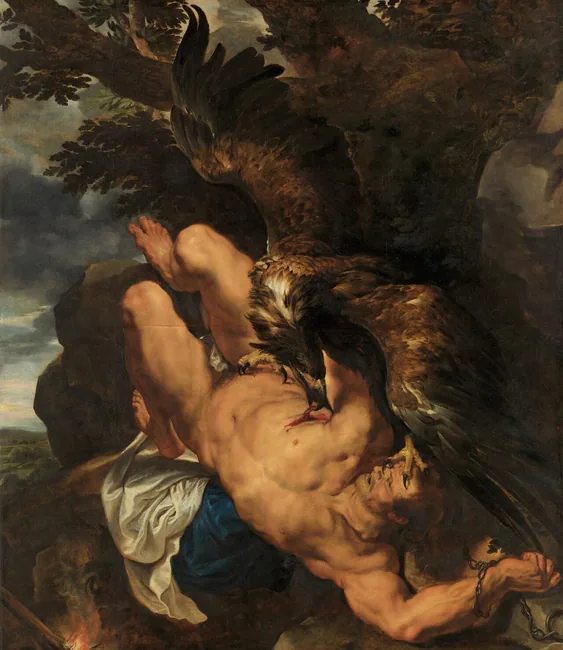
The same myth appears in the room lists for Godoy and Washington. In the documented Rubens and Snyders painting, the eagle and bound body turn divine punishment into a forceful physical struggle. The Assereto reference offers a second treatment, but its precise collection remains unresolved.
Read the comparison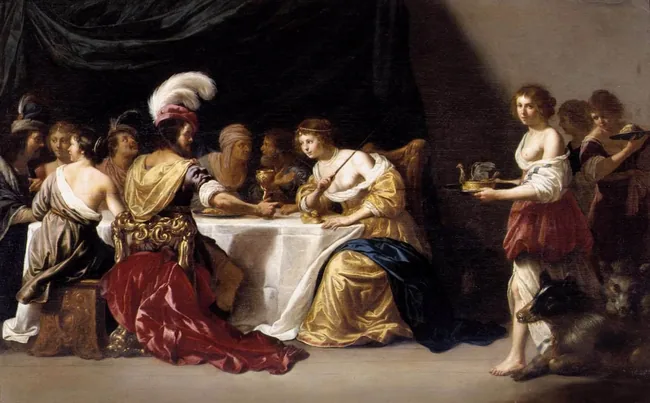
A repeated name does not mean a repeated image. Trotti shows the reversal of transformation; Van Bijlert places Ulysses in an encounter with Circe; Assereto concentrates attention on preparation of a cup. Romney turns the role into a portrait performance by Emma Hamilton.
Read the comparison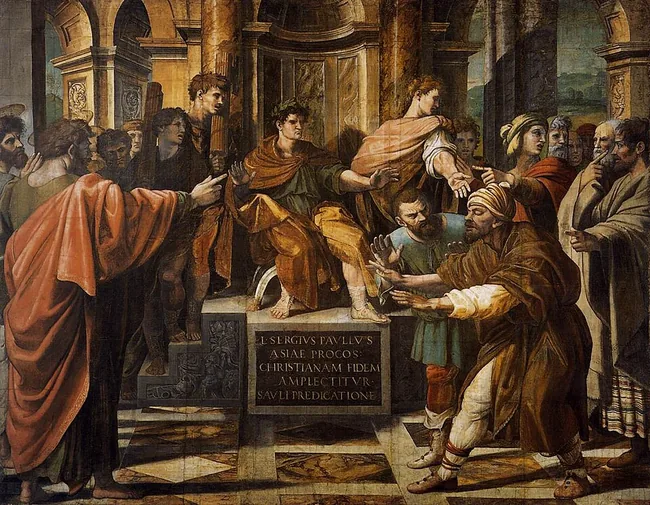
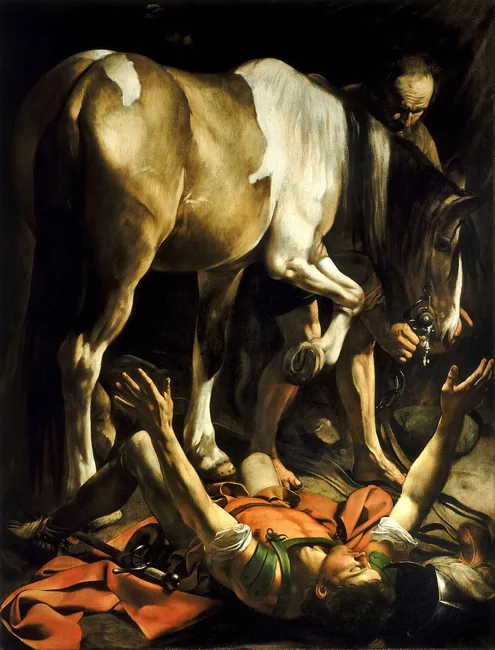
Caravaggio’s first Conversion of Saul makes Christ’s intervention visible in a crowded action. His later Cerasi canvas removes that visible heavenly body and gives extraordinary prominence to the horse and fallen Saul. Raphael’s Conversion of the Proconsul makes belief a public event before witnesses.
Read the comparison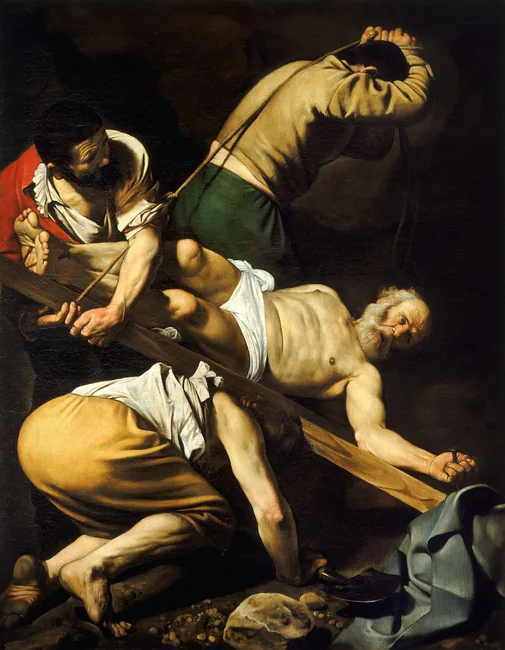
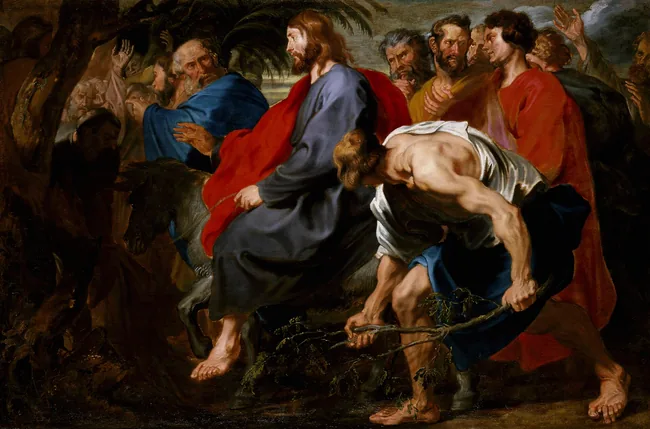
Caravaggio, Van Dyck and Velázquez do not stage sacred suffering in the same way. A close flagellation brings the viewer against the victim; the crowded Le Coup de Lance distributes attention among actions and witnesses; Velázquez isolates the crucified body against darkness.
Read the comparison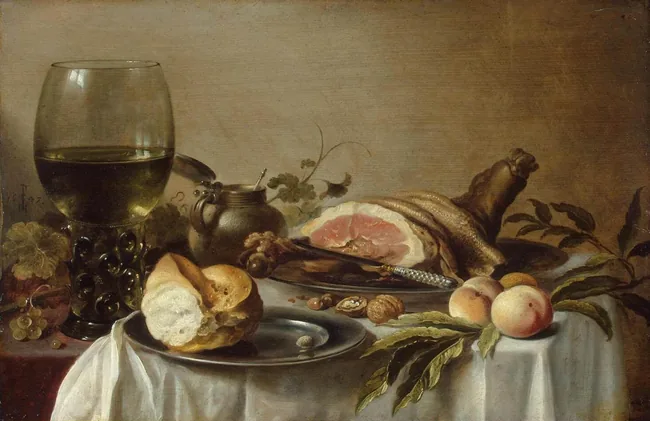
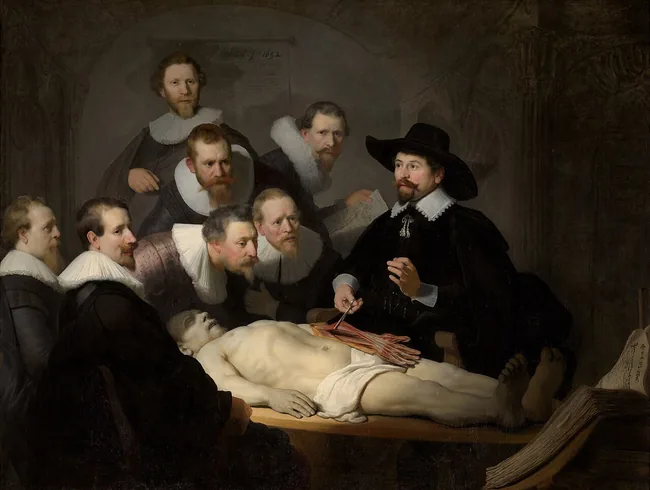
The nude body can signify divine power, vulnerability, seduction, learning or fear. Piaggi’s mythological images make the contrast particularly visible: Cupid’s triumph, the violent abduction of the Leucippides and Correggio’s sleeping Venus organise very different relationships between bodies and spectators.
Read the comparison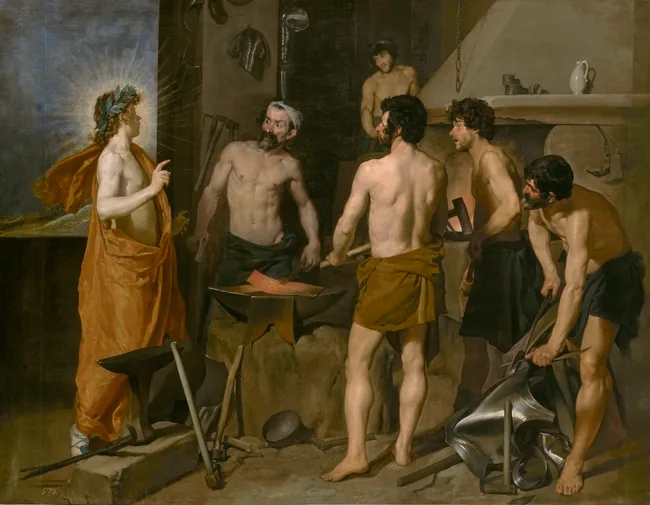
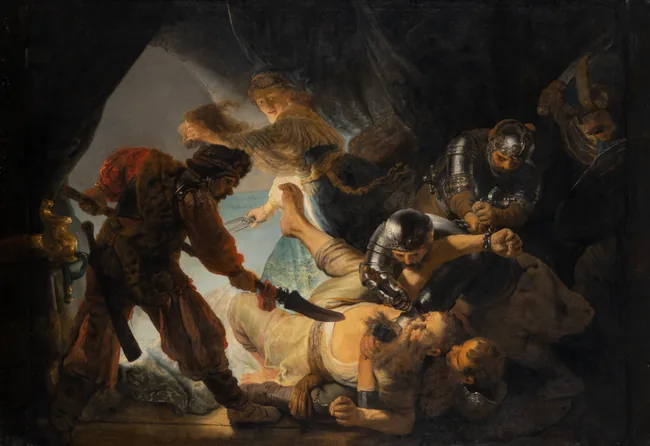
In Velázquez’s forge, news interrupts work. In Rembrandt’s Samson, a revealed secret destroys physical strength. Caravaggio’s Taking of Christ makes betrayal occur through a familiar gesture; Leonardo distributes the response to its announcement across a table.
Read the comparison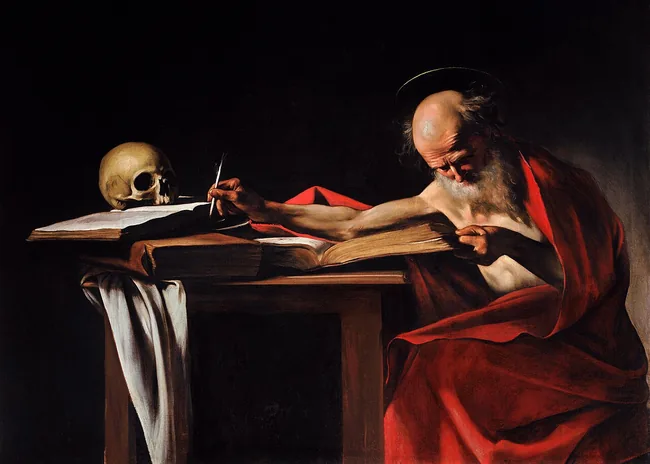
Raphael builds a public architecture for philosophical debate. Caravaggio’s Jerome works in solitude beside a skull. Rembrandt’s anatomy lesson turns attention into a professional group portrait; the alchemists place inquiry in a crowded workshop.
Read the comparison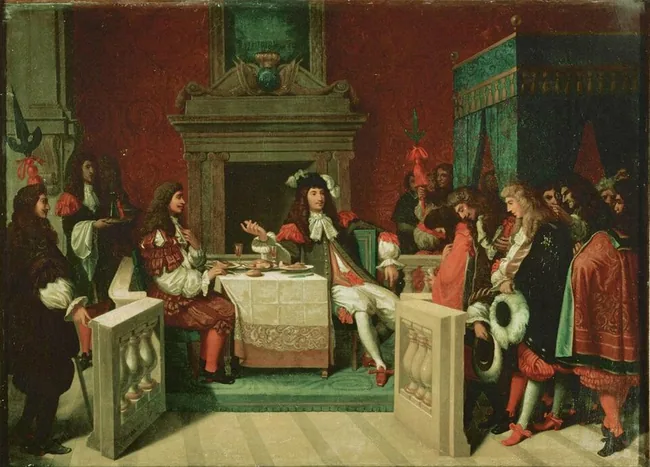
Court paintings arrange rank through spacing, costume and ceremony. The royal and statesman portraits make authority visible in a single body, while Rembrandt’s militia distributes it across a group. Regnault translates political claims into allegorical figures.
Read the comparison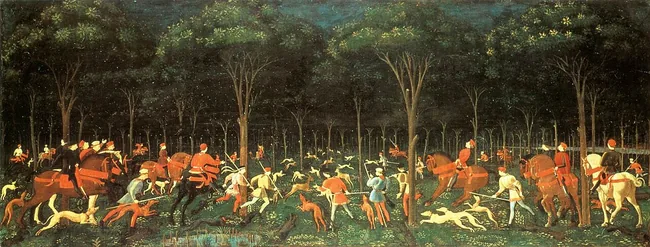
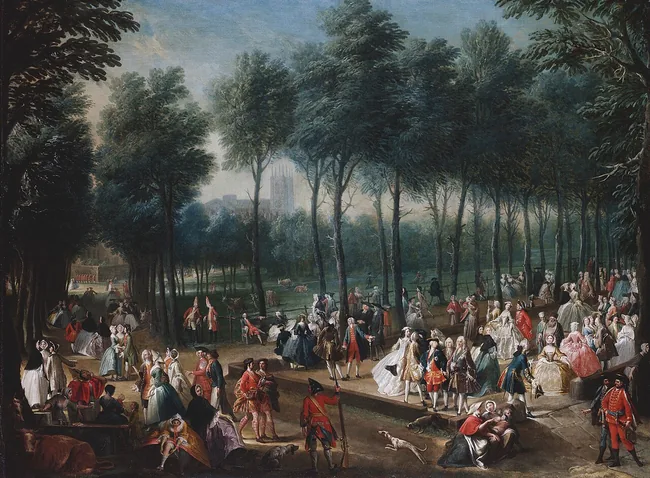
Uccello draws riders and hounds towards a vanishing point; Oudry concentrates the hunt around the quarry. One invites the eye to travel into space, the other makes the encounter immediate. Both organise animal movement for a human viewer.
Read the comparisonMemling’s triptych places individual bodies within a comprehensive division of salvation and damnation. Rubens’s Fall of the Damned turns that division into a downward rush. Ribera’s Ixion and the two Saturns bring mythological punishments into the same visual field.
Read the comparison03
Works found: 93
Peter Paul Rubens · c. 1621
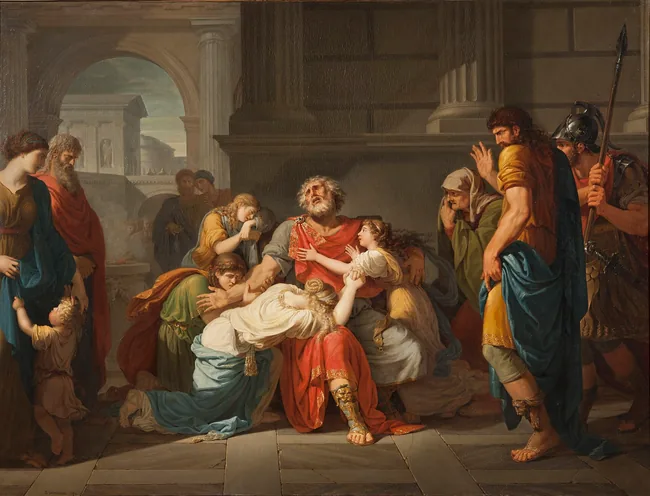
Bénigne Gagneraux · 1784
Francisco de Goya · c. 1820–1823
Michelangelo Merisi da Caravaggio · 1600–1601
Giovanni Battista Trotti, called Il Malosso · c. 1610 (within the 1604–1619 Parma fresco campaign)
Jan van Bijlert · Undated; seventeenth century
Hippolyte-Casimir Gourse · Date unverified
Gioacchino Assereto · c. 1630
George Romney · c. 1782
Dosso Dossi · c. 1518
Pieter Claesz · 1647
Jean-Baptiste Regnault · c. 1794–1795
Jean-Auguste-Dominique Ingres · 1857
Michelangelo Merisi da Caravaggio · c. 1606
Anthony van Dyck · c. 1617
Michelangelo Merisi da Caravaggio · 1601–1606; completed late 1605 or early 1606
Raphael (Raffaello Sanzio) · 1504
Raphael (Raffaello Sanzio) · 1516–1520
Diego Velázquez · 1630
Diego Velázquez · c. 1632
Anicet Charles Gabriel Lemonnier · 1814–1824
Raphael (Raffaello Sanzio) · 1509–1511
Peter Paul Rubens · c. 1604–1605; probably reworked c. 1606–1608
Rembrandt van Rijn · 1636
Rembrandt van Rijn · 1642
Michelangelo Merisi da Caravaggio · c. 1607
Jacques Laumosnier · Late 17th century–early 18th century (French catalogue: last quarter 17th / first quarter 18th)
Albrecht Dürer · 1514
Jacob Jordaens · 1645–1650
Jacques-Louis David · 1793
Antonio González Velázquez · 1760–1765
Leonardo da Vinci · 1495–1498
Antoine Coypel · c. 1715–1722
Raphael · c. 1515–1516
Jean-Baptiste Oudry · 1734
Rembrandt van Rijn · 1632
Paolo Uccello · c. 1465–1470
Jacopo Tintoretto · c. 1575
Attributed to Joseph Nickolls · c. 1745
Peter Paul Rubens · c. 1618
Henry Fuseli · c. 1781
Caravaggio · 1608
Jacques-Louis David · 1778
Jean-Baptiste Regnault · 1790
Anthony van Dyck · c. 1618–1620
Felice Boselli · Last quarter of the seventeenth–first quarter of the eighteenth century
Peter Paul Rubens · c. 1617–1619
Francisco de Goya · 1801
Michelangelo Merisi da Caravaggio · 1602
Peter Paul Rubens and Frans Snyders · Begun 1611–1612; completed by 1618
Gavin Hamilton · 1763–1767
Presumably Agustín Esteve, after Francisco de Goya · 1789–1790
Anton Raphael Mengs · c. 1765
Francisco de Goya · 1808–1812
Simon Vouet · c. 1622–1625
Artemisia Gentileschi · c. 1612–1613
Peter Paul Rubens · 1636–1638
Caravaggio · c. 1595–1596
Caravaggio · 1600–1601
Caravaggio · c. 1601
Hans Memling · 1467–1473
Caravaggio · 1602
Jusepe de Ribera · 1632
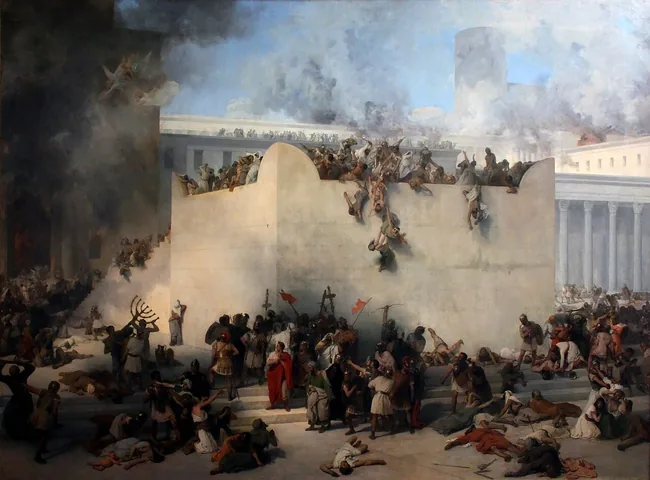
Francesco Hayez · 1867
Sir Thomas Lawrence · 1796–1797
Pompeo Girolamo Batoni · 1780–1781 (Warsaw candidate)
After Caravaggio; disputed Doria Pamphilj version · Early seventeenth century (candidate)
François Boucher · 1752 (Munich candidate)
Peter Paul Rubens with Jan Wildens · c. 1618
Caravaggio (Michelangelo Merisi) · 1601–1602
Correggio (Antonio Allegri) · c. 1524–1527
Gioacchino Assereto (wiki/reference attribution) · Unverified; seventeenth century attribution
Robert Edge Pine · 1785
Unknown · 18th century, according to Ferrer Benimeli
David Teniers the Younger · c. 1650
Anonymous, after David Teniers the Younger · Undated in the verified catalogue
Henri-Horace Roland Delaporte · 1763
Henry Fuseli · 1781
Anthony van Dyck, working in Rubens’s workshop · c. 1620
Giulio Romano · c. 1536–1537
Caravaggio · c. 1600–1601
Guido Reni · 1630s
Guido Reni · 1630s
Guido Reni · 1630s
Guido Reni · 1633–1634
Paolo Veronese · After c. 1571
Merry-Joseph Blondel · 1840
Attributed to Francisco de Goya · c. 1808–1812
François Lemoyne · 1733–1736
Jan de Bray · 1663
Artist not yet verified · Unverified for this version
Joshua Reynolds · 1780
Benjamin West · c.1776
No works match these filters.