Comparison · Works: 2

Saturn: Rubens and Goya

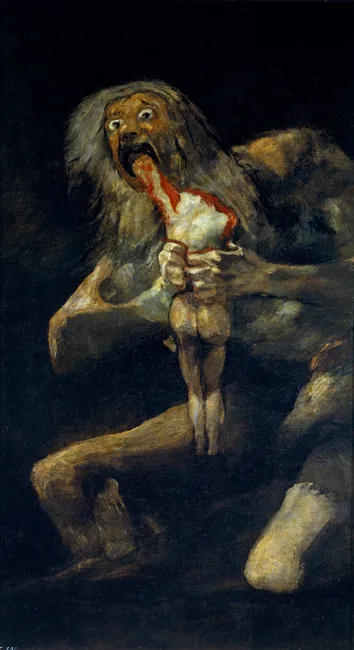
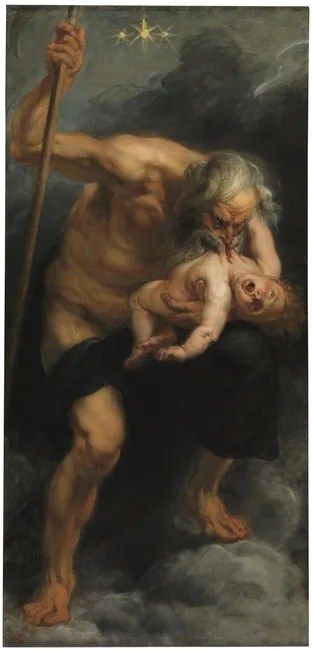
Both painters show the god devouring his child. Rubens places the action in a legible mythological world: a powerful aged body, open sky and attributes that locate the story. Goya strips away much of that explanatory setting; darkness and the fixed stare make the violence feel immediate and unstable.

The comparison connects Louis’s room with the Great Hall. It also crosses nearly two centuries: Goya’s wall painting was made after the game’s 1793 setting. That chronological break is observable; a deliberate plot explanation for it is not established.

Look at the works together

Saturn Devouring His Son

Frame evidence

Goya isolates the god’s violence in a dark, unstable space. The painting began on a wall of the Quinta del Sordo and was later transferred to canvas. Compare Rubens’s more legible mythological setting with this near-erasure of context: the same story becomes a very different encounter.
View catalogue entry

Saturn Devouring a Son

Community inventory

Fearing a prophecy that a child would overthrow him, Saturn devours his offspring. Rubens makes the infant’s terror visible while retaining the god’s scythe and celestial setting. Three lights above evoke early telescopic observations of Saturn as a triple object.

View catalogue entry