Comparison · Works: 17

Knowledge: scholars, alchemists and doubt

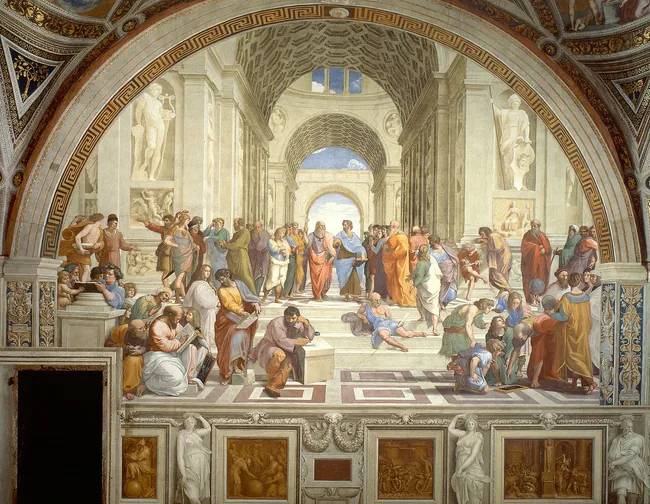
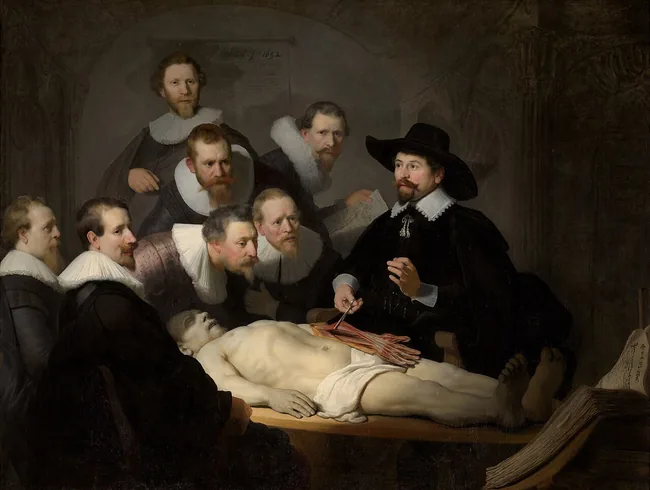
Raphael builds a public architecture for philosophical debate. Caravaggio’s Jerome works in solitude beside a skull. Rembrandt’s anatomy lesson turns attention into a professional group portrait; the alchemists place inquiry in a crowded workshop.

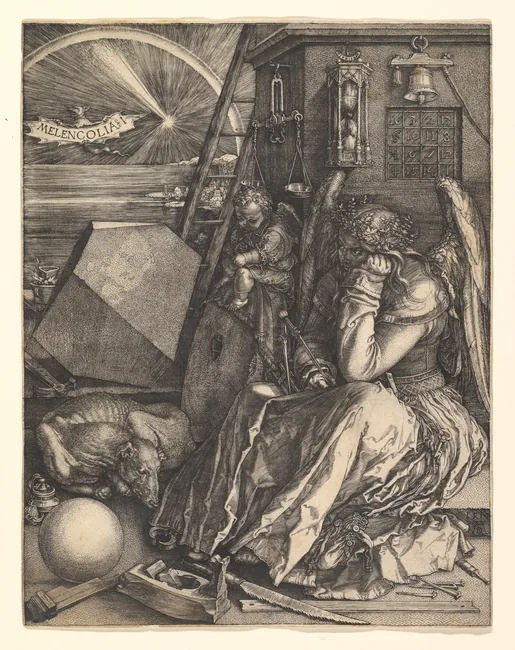
Dürer’s Melencolia I complicates the confidence of these scenes. Tools and measurements surround a figure unable to act. The difference is not simply science versus superstition: each image offers a distinct account of what knowledge requires, and what it cannot guarantee.

Look at the works together

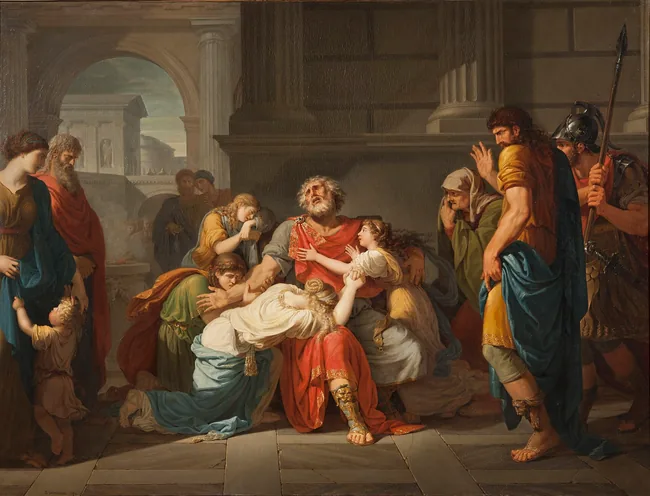
The Blind Oedipus Commending his Children to the Gods

Community inventory

Oedipus has gained devastating knowledge at the cost of sight. His appeal for his children turns a celebrated ruler into a dependent father. The classical arrangement and Laocoön-like suffering make this a useful counterpart to other images of revelation and damaged vision.
View catalogue entry

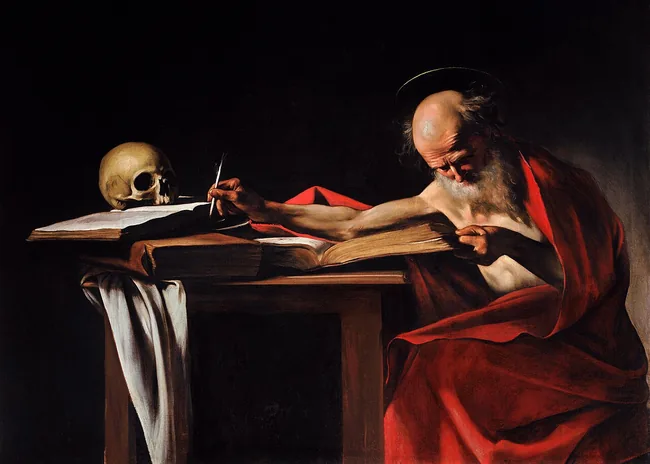
Saint Jerome Writing (Saint Jerome)

Community inventory

Jerome appears as an elderly scholar studying and translating scripture. The scholar's act of writing confronts the skull's reminder that knowledge is pursued within a finite life.

View catalogue entry

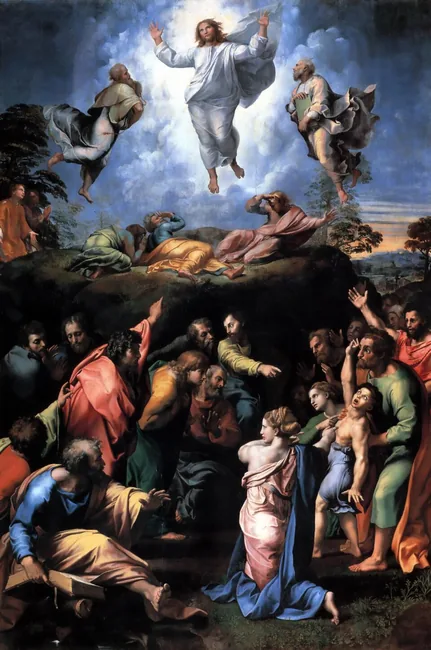
The Transfiguration

Community inventory

Cardinal Giulio de' Medici commissioned it for Narbonne Cathedral, but the work remained in Rome after Raphael's death. The luminous upper vision and the troubled group below make spiritual revelation coexist with human distress.

View catalogue entry

The School of Athens

Community inventory

The room originally served as Pope Julius II's library and private office. Intellectual authority is imagined as a shared public space of discussion, measurement and disagreement.

View catalogue entry

Melencolia I

Community inventory

The winged figure is surrounded by tools associated with measurement and geometry. Unused instruments surround a figure whose capacity to make and measure has temporarily become an inability to act.

View catalogue entry

The Anatomy Lesson of Dr Nicolaes Tulp

Frame evidence

The illuminated body is the centre of a collective exercise in looking. Tulp’s demonstration and the surrounding faces turn dissection into both instruction and professional portraiture. Compare the organised witnesses here with the scientists and philosophers gathered in Raphael’s School of Athens.

View catalogue entry

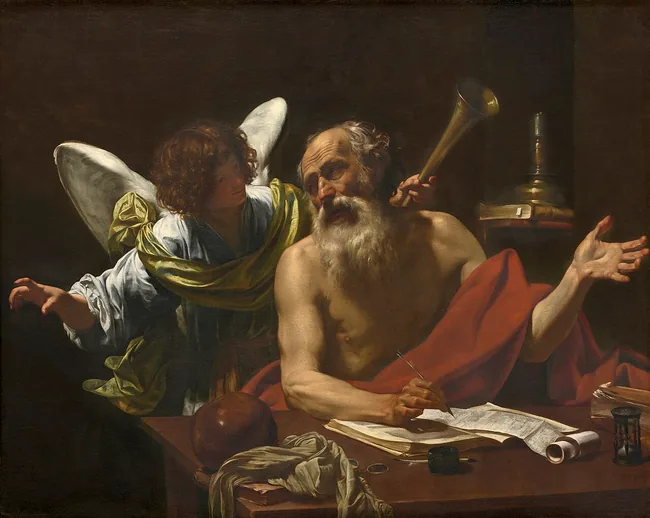
Saint Jerome and the Angel

Community inventory

Jerome pauses over his writing and turns toward an angel carrying a trumpet. Books, spectacles and an hourglass frame the scholar’s work within mortal time. Vouet gives intellectual labour a bodily immediacy through the saint’s bare torso and directed light.

View catalogue entry

Saint Francis of Assisi in Ecstasy

Community inventory

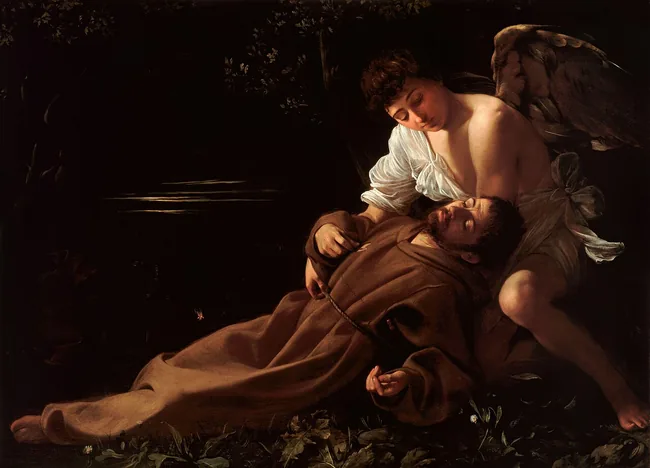
An angel supports Francis after his encounter with the wounds of Christ. Caravaggio makes ecstasy intimate and bodily, drawing on images of the dead Christ held by an angel. Darkness concentrates attention on the saint’s vulnerability and the attendant’s care.

View catalogue entry

The Incredulity of Saint Thomas

Community inventory

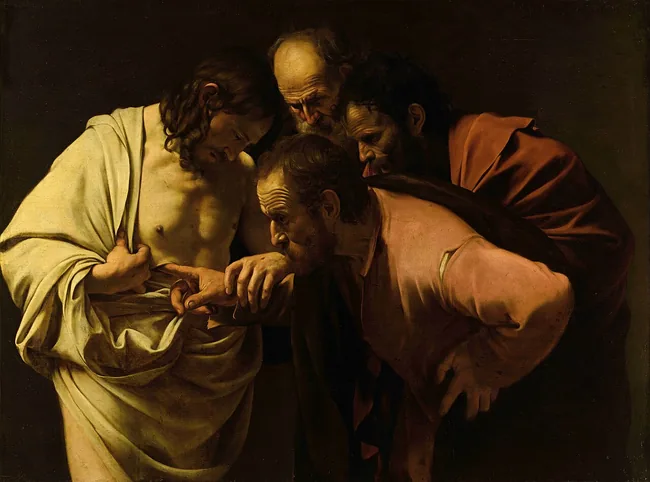
Christ guides Thomas’s finger into the wound in his side while two disciples inspect the encounter. The compressed grouping makes doubt an act of looking and touching. Once in the Giustiniani collection, the painting reached the Prussian collection in 1815.

View catalogue entry

The Inspiration of Saint Matthew

Community inventory

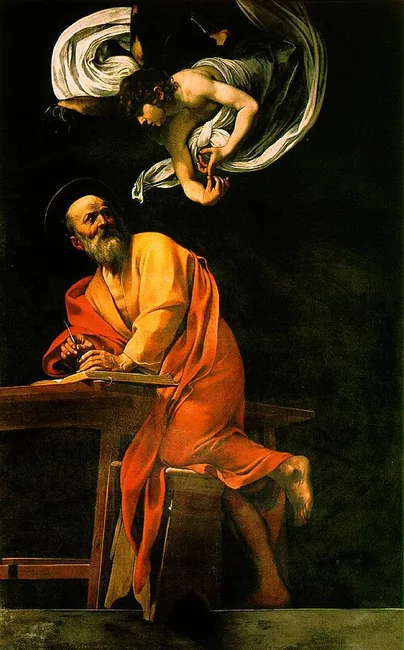
Matthew interrupts his writing to follow an angel’s instruction. The angel’s movement contrasts with the saint’s position at the desk. Above Contarelli Chapel’s altar, the painting turns the writing of scripture into an exchange between divine prompting and human work.

View catalogue entry

The Signs of Obscurantism [game/wiki label]

Placement or version unresolved

In the developer’s room render, the image above the fireplace matches a historical picture of Masonic symbols, reproduced by Ferrer Benimeli as figure 37. Its inscription reads “Sit Lux et Lux fuit”: “Let there be light, and there was light”.

View catalogue entry

The Alchemist

Community inventory

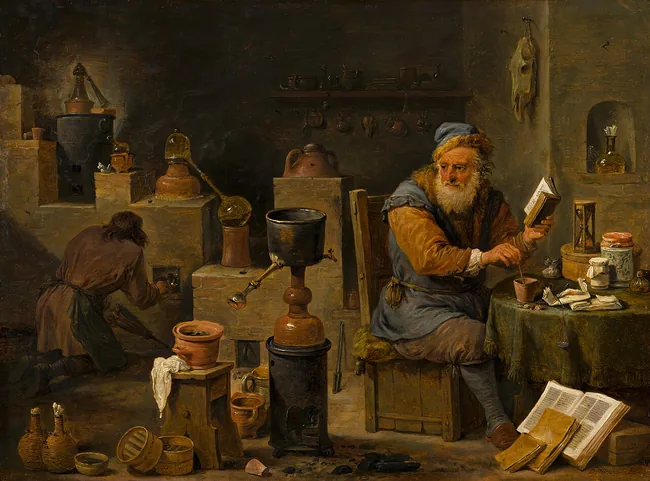
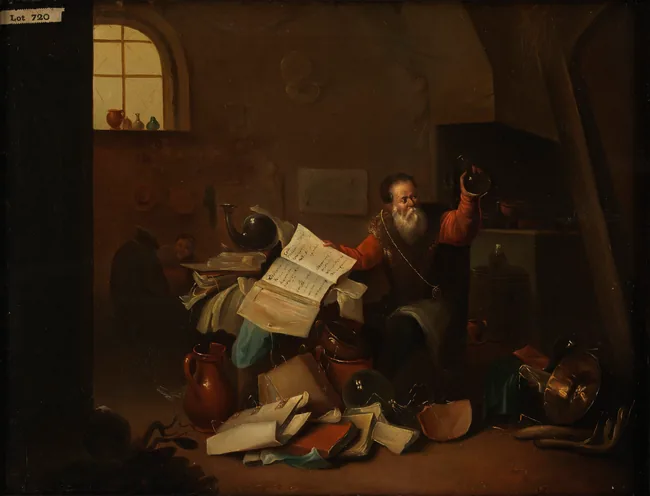
A furnace, vessels and a book stage the alchemist’s absorbing labour. The museum connects this familiar subject with criticism of futile gold-making and poverty. In Wöllner’s room, the picture therefore complicates any simple equation between secret knowledge and reliable understanding.

View catalogue entry

An Alchemist in his Laboratory

Community inventory

Another workshop makes alchemy a repeated theme in the room, but its status as a copy matters. It shows how images of specialised knowledge circulate independently of their original maker. Compare the working gestures and apparatus without treating the scene as documentary science.

View catalogue entry

Vase de lapis, sphère et musette

Community inventory

A costly stone vase, a globe and a musette bring material luxury, ordered knowledge and music into one still life. Against the alchemists, these objects offer a quieter image of cultivated possession. This thematic comparison is an interpretation of the represented objects.

View catalogue entry

Saint Matthew and the Angel

Frame evidence

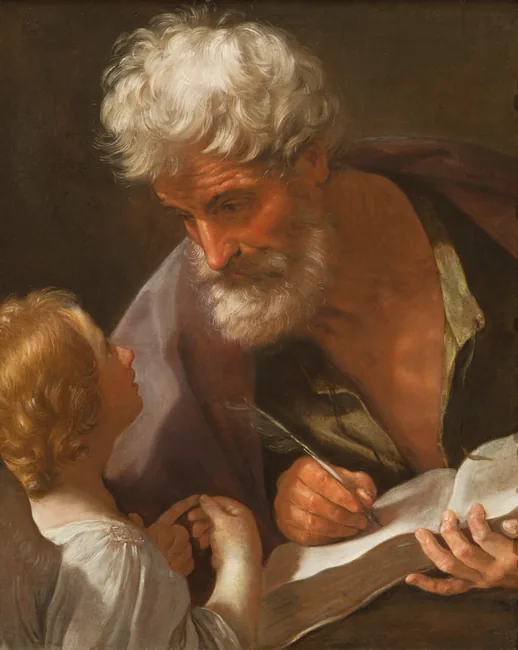
Matthew's silver hair, open book and accompanying angel make this a scene of inspired writing. Reni painted it as part of a series of four evangelists, now at Bob Jones University. The tower brings three of those pictures into a new grouping with a separate portrait of Paul.

View catalogue entry

Saint Mark the Evangelist

Frame evidence

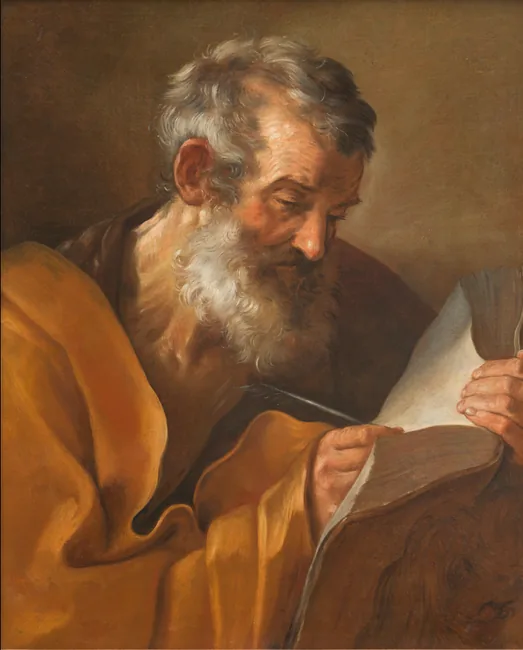
Mark bends toward his book, lifting a page against broad orange drapery. His lion is faintly visible at the lower right. The painting belongs to Reni's BJU series: the particular pose and book distinguish it from the artist's other treatments of this evangelist.

View catalogue entry

Saint John the Evangelist

Frame evidence

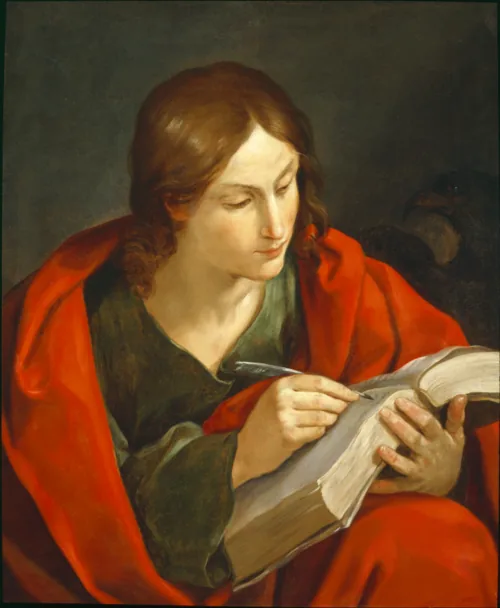
John writes with a quill, wearing red and green against a dark background. The eagle at the upper right identifies him. His youthful face and vivid clothing contrast with the older writers in Reni's series; in the tower, this canvas stands on the floor near the window.

View catalogue entry