Comparison · Works: 27

Power on display: courts, portraits and republics

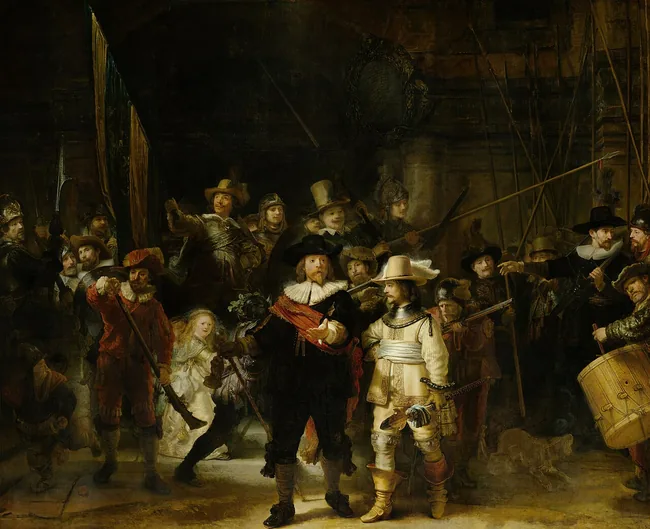
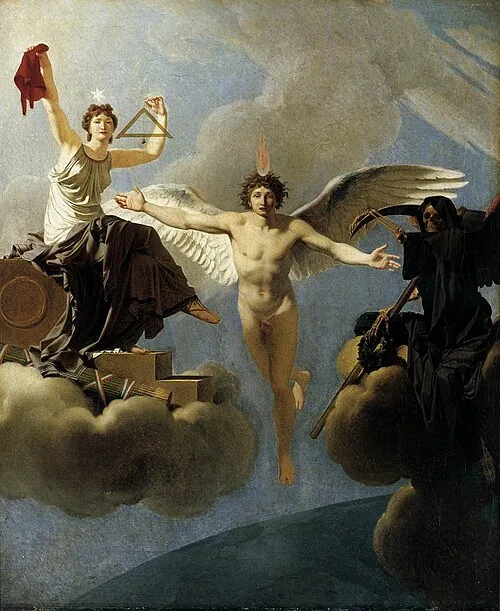
Court paintings arrange rank through spacing, costume and ceremony. The royal and statesman portraits make authority visible in a single body, while Rembrandt’s militia distributes it across a group. Regnault translates political claims into allegorical figures.

Chronology matters here. A nineteenth-century painting of a sixteenth-century court is evidence of later historical imagination, not a contemporary document of that event. Reading the gallery well means keeping the depicted date, the creation date and the game’s 1793 setting distinct.

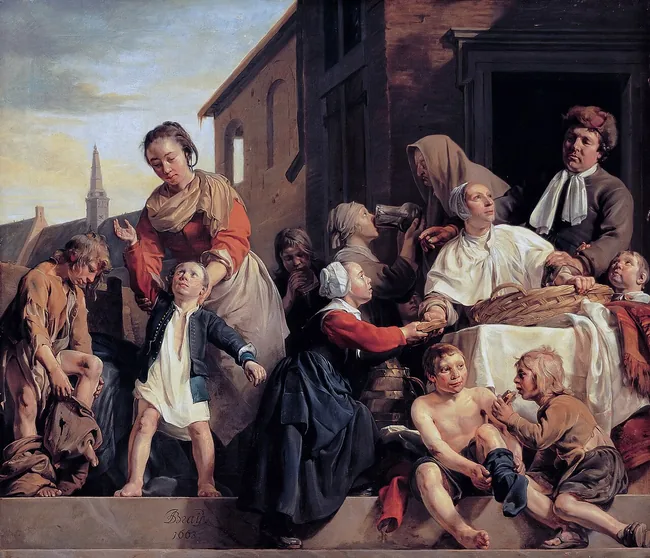
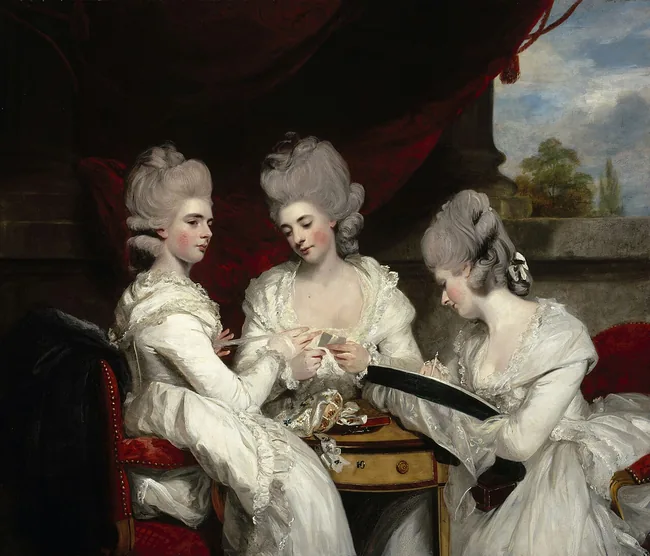
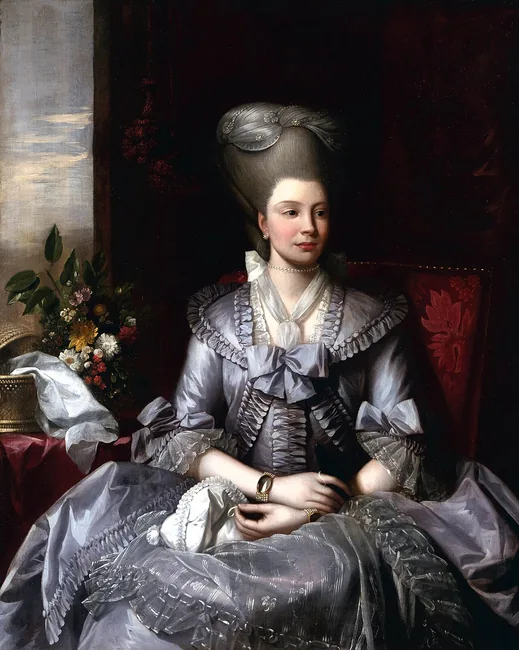
Emily’s room adds a domestic variation on rank. West’s Charlotte sits beside a workbasket, and Reynolds’s Waldegrave sisters make needlework a shared performance. Set against these portraits, De Bray’s orphanage scene shifts attention to collective care and dependence. The comparison concerns the paintings’ visible subjects, not the guest’s motives.

Look at the works together

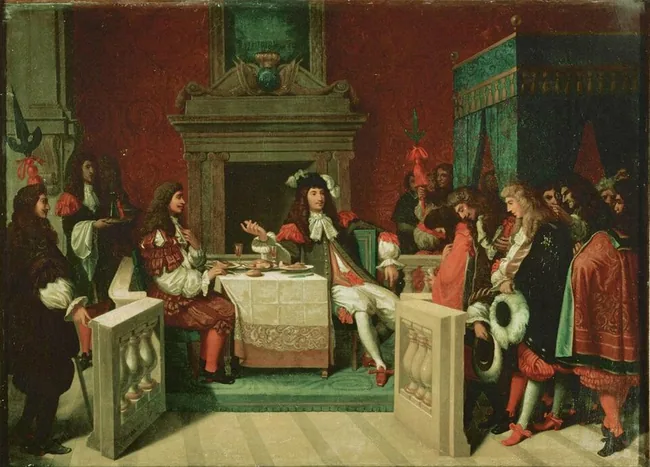
Molière at the Table of Louis XIV

Community inventory

Ingres gave the 1857 painting to the Comédie-Française on 1 January 1858 in exchange for lifetime admission. Royal recognition of the artist is staged in front of an audience of courtiers.

View catalogue entry

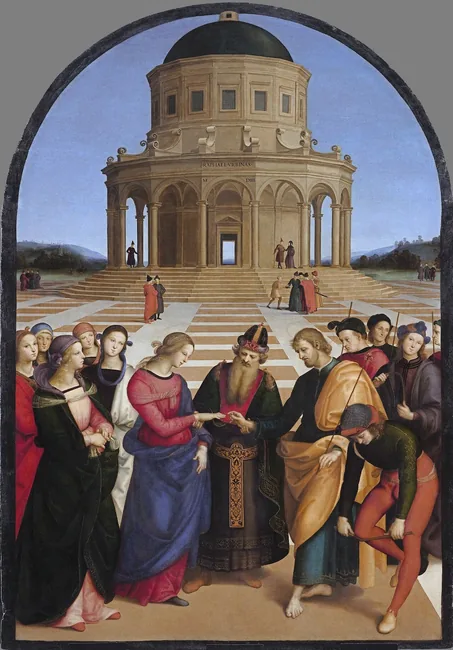
The Marriage of the Virgin

Community inventory

The altarpiece came from San Francesco in Città di Castello and entered Brera in 1805. Marriage becomes part of an ordered world whose people and architecture are joined by proportion.

View catalogue entry

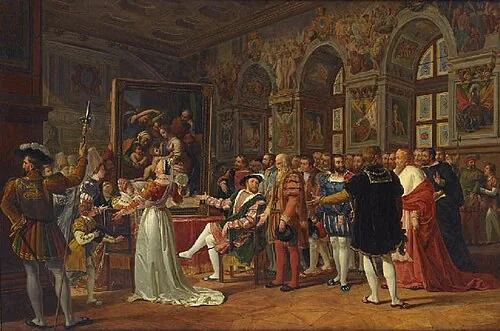
Francis I Receiving Raphael's Great Holy Family at Fontainebleau

Community inventory

The Rouen painting is a replica of a composition originally commissioned by Joséphine for Malmaison and shown at the Salon of 1814. The court's reception of an artwork presents collecting as an act of royal prestige.

View catalogue entry

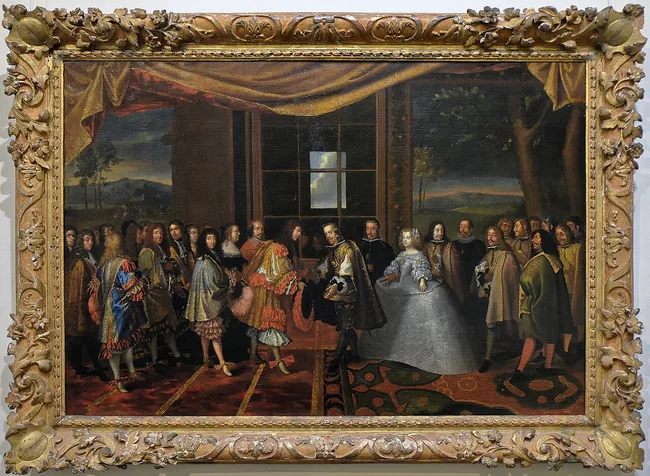
Meeting of Louis XIV and Philip IV on the Isle of Pheasants

Community inventory

The marshal de Tessé commissioned this reduced copy after Henri Testelin's tapestry cartoon for the History of the King series. Balanced ranks and controlled gestures turn political reconciliation into a carefully staged encounter.

View catalogue entry

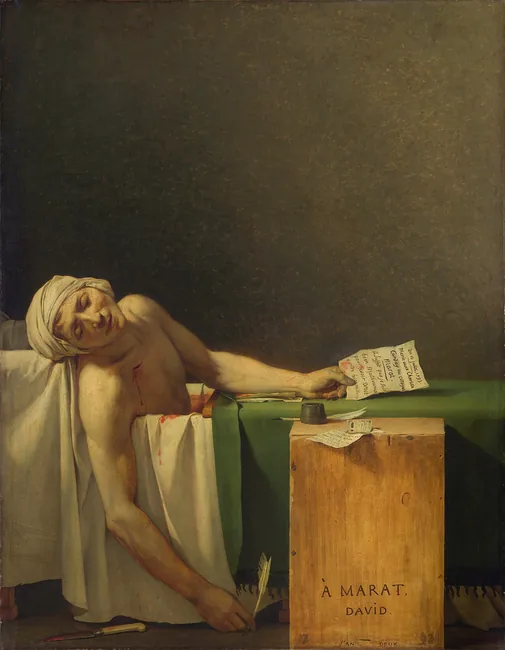
The Death of Marat

Frame evidence

A dead revolutionary is presented with the restraint of a devotional image. The letter, pen and wooden box turn a private killing into a public argument about virtue. Set beside the Passion scenes, the painting makes political martyrdom borrow the language of sacred mourning.

View catalogue entry

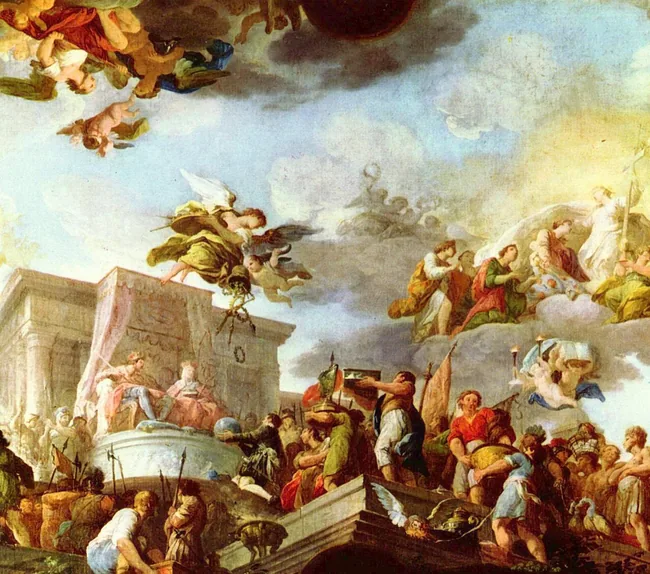
Columbus Offering the New World to the Catholic Monarchs

Community inventory

The upward view and clouds turn colonial expansion into royal spectacle. Allegory compresses people and territories into a gift presented to monarchs. Read the image as a statement of imperial ambition, rather than a neutral record of an encounter.

View catalogue entry

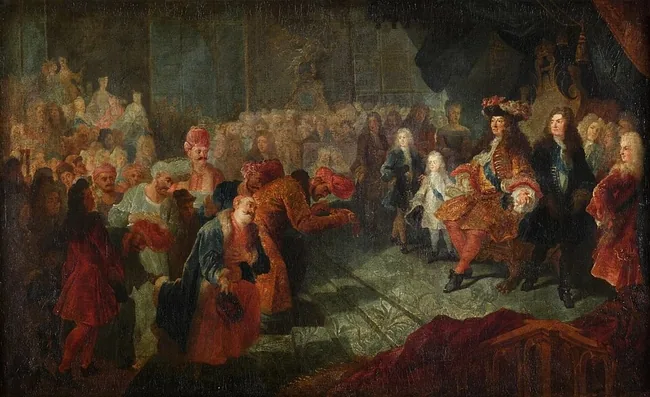
Louis XIV Receiving the Persian Envoys

Community inventory

Court ceremony makes diplomacy visible as an arrangement of ranks and distances. The monarch’s reception is both a meeting and a performance before spectators. Compare its hierarchy with the more animated collective self-presentation of Rembrandt’s militia.

View catalogue entry

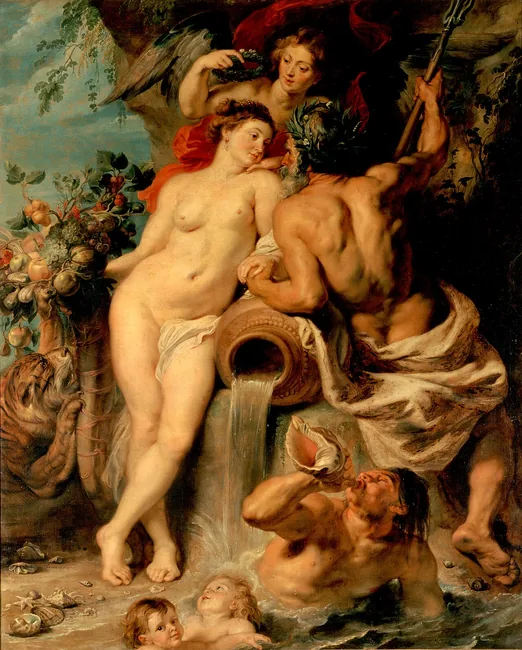
The Union of Earth and Water

Community inventory

The meeting of personified elements promises abundance. Bodies and attributes make an abstract alliance tangible, connecting fertility with prosperity. Compared with Rubens’s falling Phaeton or tortured Prometheus, this mythological body is an instrument of concord rather than catastrophe.

View catalogue entry

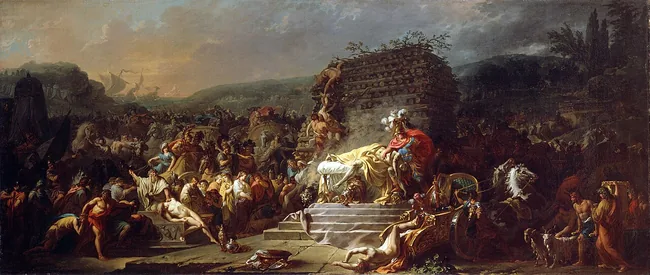
The Funeral of Patroclus

Community inventory

Achilles mourns Patroclus amid the machinery of an immense funeral. The panoramic oil sketch links friendship, violence and public ritual. Unlike the compressed stillness of David’s Marat, grief here spreads across a landscape filled with bodies and actions.

View catalogue entry

Allegory of the Declaration of the Rights of Man

Community inventory

Minerva writes the rights of man while personifications and contemporary figures gather around her. Louis XVI’s bust remains part of the image. The painting records a revolutionary language that could still imagine liberty alongside monarchy, unlike a simple opposition between king and republic.

View catalogue entry

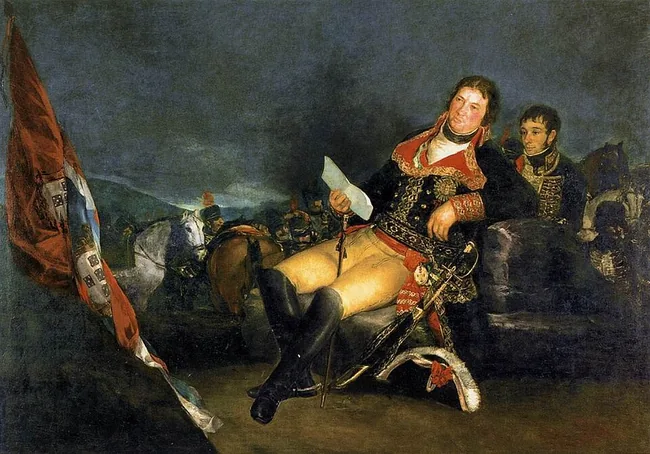
Manuel Godoy as General

Community inventory

Godoy reclines with conspicuous assurance after a military success. Uniform, orders and the battlefield setting convert a portrait into a public claim to power. Its position in his game bedroom combines self-image with political status, without proving he chose the decoration.

View catalogue entry

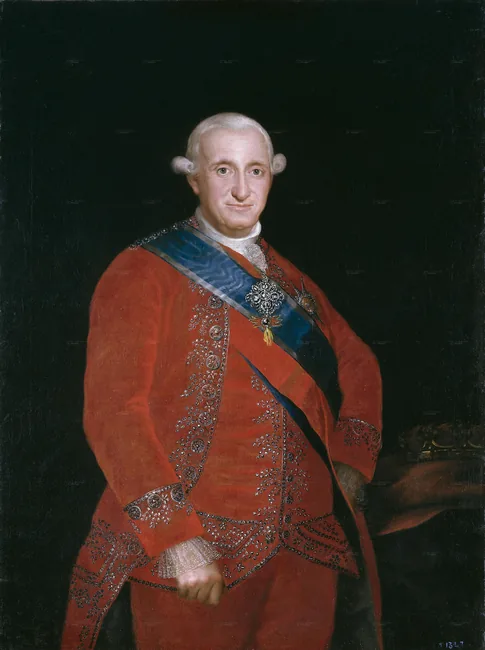
Charles IV, King of Spain

Community inventory

The royal image uses dress, decorations and pose to make kingship visible. Beside Godoy’s portrait, it supplies the courtly hierarchy within which his authority operates. Repetition through copies was part of that political image-making, so attribution affects interpretation as well as labelling.

View catalogue entry

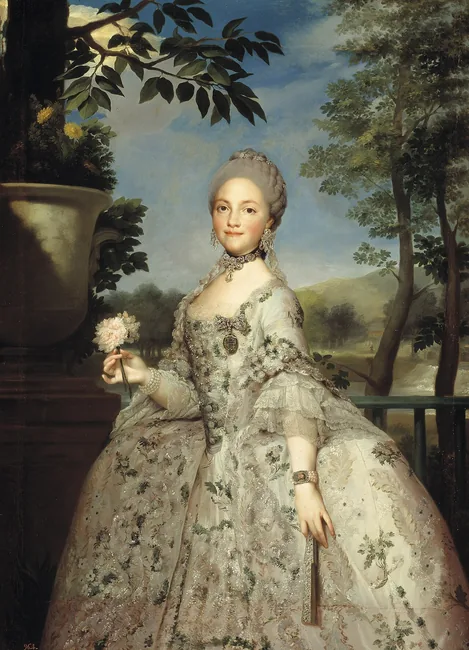
María Luisa of Parma, Princess of Asturias

Community inventory

Mengs depicts María Luisa before she became queen. Elaborate dress and controlled presentation establish rank and dynastic promise. In the game room, her image sits within a network of Spanish court portraits; that setting should not erase the painting’s earlier moment.

View catalogue entry

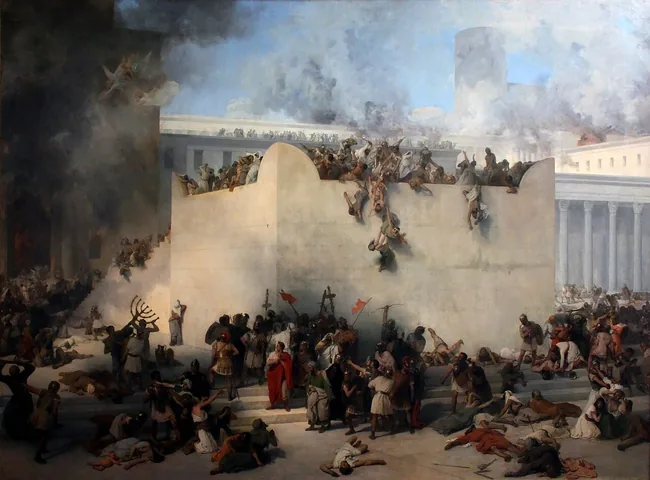
The Destruction of the Temple of Jerusalem

Community inventory

The destruction of a sacred building becomes a vast history painting. Hayez gathers architectural grandeur and human suffering in a work completed in 1867, long after the game’s 1793 setting. In Piaggi’s suite, its scale makes institutional religion visible through catastrophe.

View catalogue entry

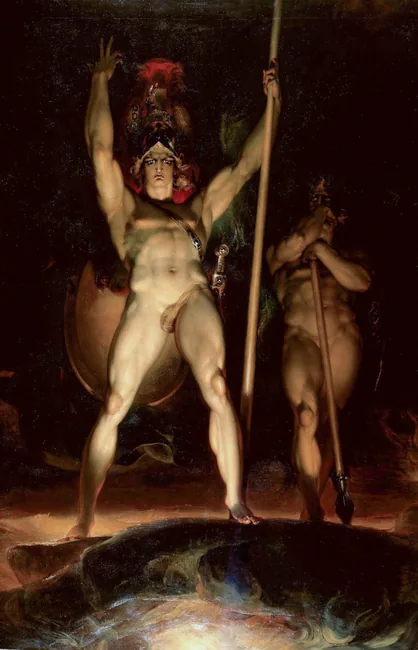
Satan Summoning His Legions

Frame evidence

Lawrence gives Milton’s rebel a monumental presence. The gathering of demonic forces draws on Paradise Lost, bringing literary imagination into a room otherwise populated by sacred history and papal portraiture. Heroic scale here does not imply moral approval of the figure.

View catalogue entry

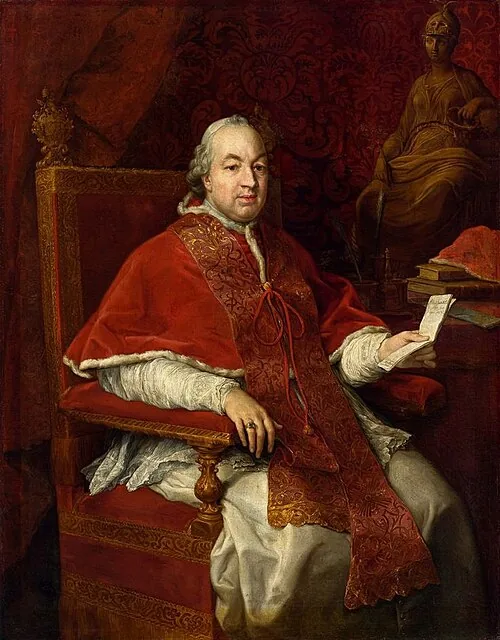
Portrait of Pope Pius VI

Community inventory

The papal portrait presents office through pose, costume and ceremony. It is a useful counterweight to the suite’s mythological bodies: authority is clothed and legible through signs. Several versions exist, so the sitter’s identity alone cannot locate the exact canvas.

View catalogue entry

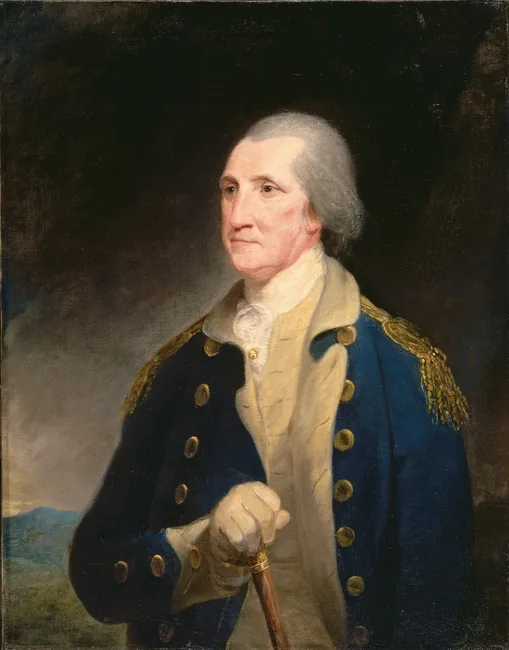
George Washington

Community inventory

Pine’s portrait presents Washington as an identifiable public figure rather than a mythological hero. In a bedroom that also contains Prometheus, a historical face and a story of punished resistance invite comparison. The juxtaposition is interpretive evidence, not proof of personal artistic preference.

View catalogue entry

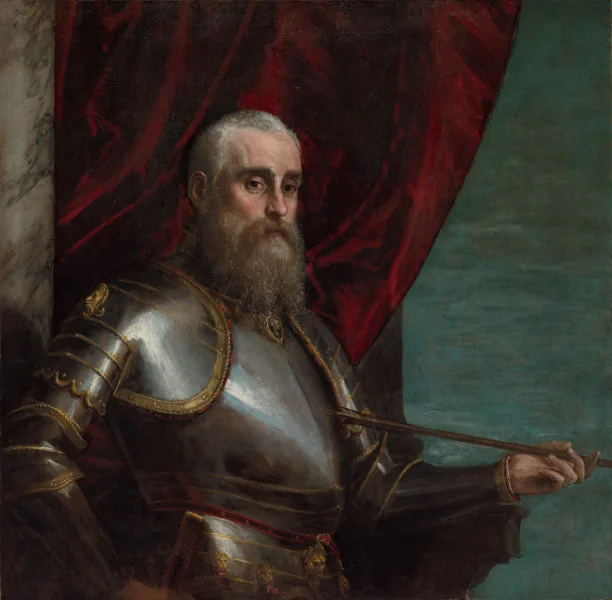
Portrait of Agostino Barbarigo — adapted as William Alexander Mortimer I

Frame evidence

The silver armour, gold borders, red curtain and arrow come from Veronese's posthumous portrait of the Venetian admiral Agostino Barbarigo. Killed at Lepanto, he holds the instrument of his death. The game reuses the composition for a fictional Mortimer ancestor, apparently replacing the face as well as the name.

View catalogue entry

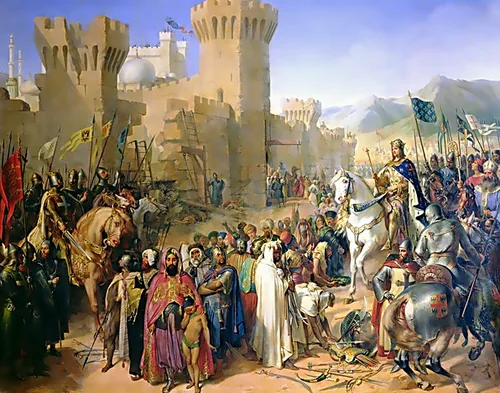
Ptolemais Handed to Philip Augustus and Richard the Lionheart, 13 July 1191

Frame evidence

Blondel presents the surrender of Acre as a crowded ceremonial spectacle, with fortified towers above and mounted rulers among the assembled figures. Louis-Philippe commissioned the painting for his historical museum at Versailles in 1838. Completed in 1840, it turns a medieval event into nineteenth-century history painting.

View catalogue entry

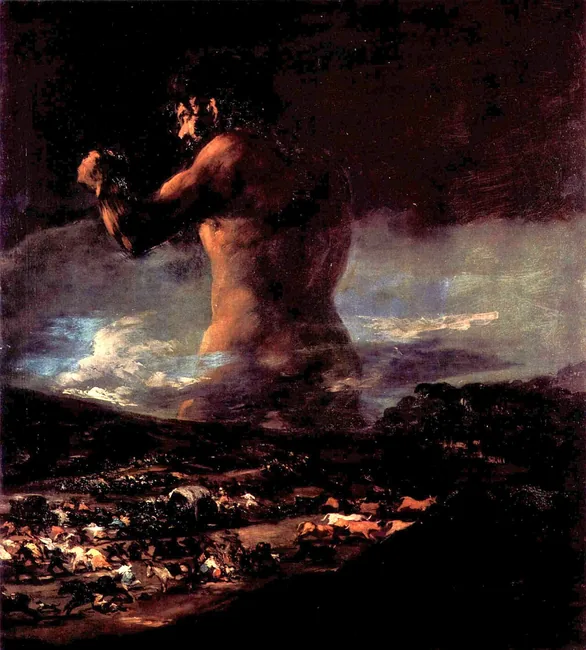
The Colossus

Frame evidence

A giant rises above clouds while people and animals scatter across the landscape below. The canvas appears on an easel in Mortimer's study, where the game treats it as unfinished. Its uncertain authorship and later date belong to the history of the real work, beyond that fictional presentation.

View catalogue entry

The Apotheosis of Hercules

Developer portfolio

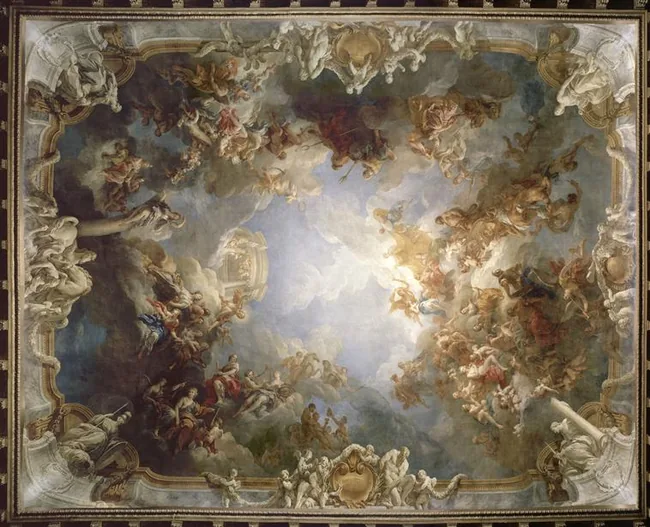
Lemoyne's vast ceiling celebrates Hercules entering Olympus. The environment artist's study image adapts its open sky, heavenly figures and distinctive golden portico to a circular dome. The Versailles original is painted on canvases attached to the ceiling, a technique called marouflage.

View catalogue entry

Tending Children at the Orphanage in Haarlem

Frame evidence

Children receive food, drink and the orphanage’s distinctive clothes: three Christian works of mercy translated into everyday care. The museum records the painting as a commission for the Haarlem House for Destitute Children. Among Emily’s royal and aristocratic portraits, it adds a different subject: dependence and the responsibilities of those with resources.

View catalogue entry

King George III in Coronation Robes

Placement or version unresolved

Louis names a portrait of George III in coronation robes beside a small table. Its ceremonial subject fits the room’s repeated references to the British royal family. The inspected view is too obstructed to select a particular painter or replica.

View catalogue entry

The Ladies Waldegrave

Frame evidence

The three Waldegrave sisters wind thread and work at lace together. Their shared task connects the figures across the canvas, turning an aristocratic group portrait into a scene of coordinated domestic activity. Louis explicitly names Reynolds when examining it in Emily’s room.

View catalogue entry

Queen Charlotte

Frame evidence

West presents Charlotte seated beside a workbasket, with folded hands, elaborate dress and a portrait bracelet. The domestic setting softens the formality of royal portraiture. This is the Berger version documented by the National Portrait Gallery, identifiable in the game from its bow, bodice, sleeves and hands.

View catalogue entry