Comparison · Works: 7

Judgment, punishment and the vulnerable body

Memling’s triptych places individual bodies within a comprehensive division of salvation and damnation. Rubens’s Fall of the Damned turns that division into a downward rush. Ribera’s Ixion and the two Saturns bring mythological punishments into the same visual field.

These scenes do not all describe a fair judgment. Their juxtaposition raises a harder question: when does an image present authority as just, and when does it make power itself terrifying? The question can be explored without translating the paintings into spoilers about the guests.

Look at the works together

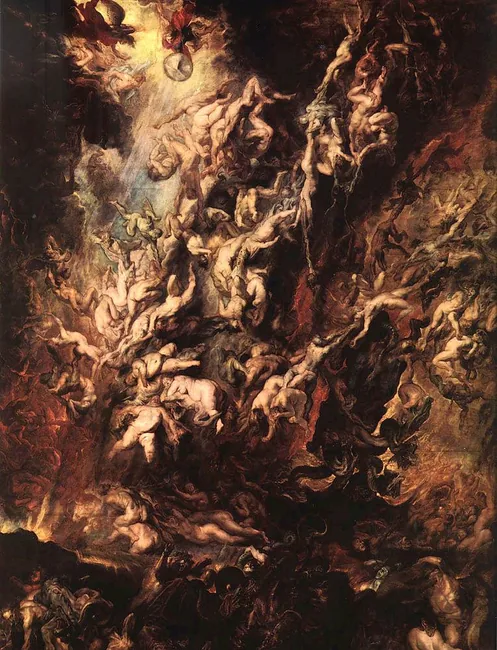
The Fall of the Damned

Community inventory

A compressed torrent of bodies and demons turns punishment into a physical downward movement. Unlike a balanced Last Judgment, this picture concentrates on damnation. In the hall it establishes a recurring vocabulary of divine authority, bodily vulnerability and unequal power.
View catalogue entry

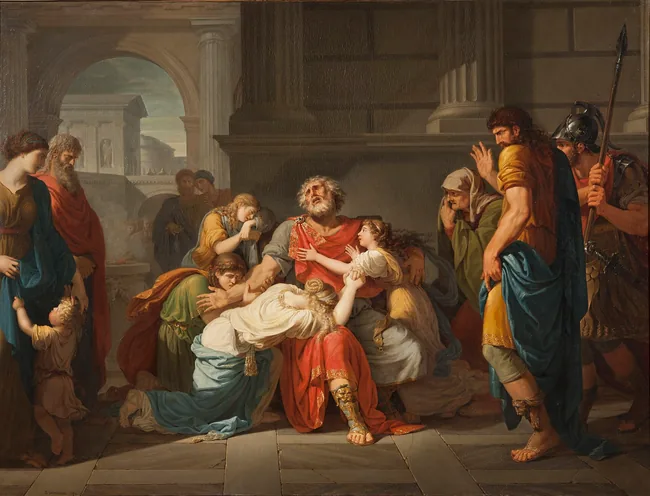
The Blind Oedipus Commending his Children to the Gods

Community inventory

Oedipus has gained devastating knowledge at the cost of sight. His appeal for his children turns a celebrated ruler into a dependent father. The classical arrangement and Laocoön-like suffering make this a useful counterpart to other images of revelation and damaged vision.

View catalogue entry

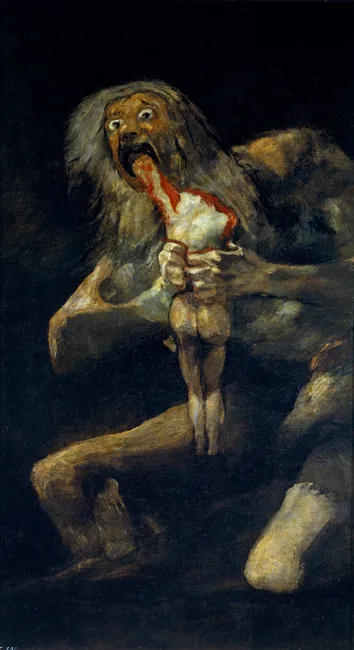
Saturn Devouring His Son

Frame evidence

Goya isolates the god’s violence in a dark, unstable space. The painting began on a wall of the Quinta del Sordo and was later transferred to canvas. Compare Rubens’s more legible mythological setting with this near-erasure of context: the same story becomes a very different encounter.

View catalogue entry

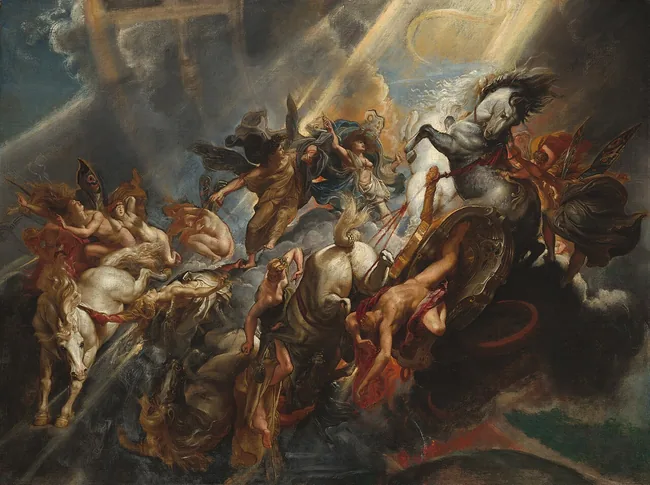
The Fall of Phaeton

Community inventory

Phaeton loses control after persuading his father to let him drive the sun chariot. Power without skill turns private ambition into a threat to the whole world.

View catalogue entry

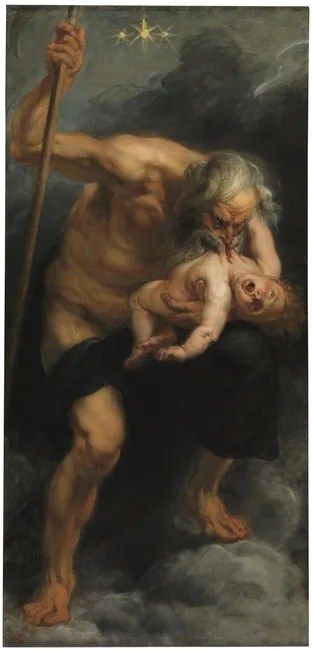
Saturn Devouring a Son

Community inventory

Fearing a prophecy that a child would overthrow him, Saturn devours his offspring. Rubens makes the infant’s terror visible while retaining the god’s scythe and celestial setting. Three lights above evoke early telescopic observations of Saturn as a triple object.

View catalogue entry

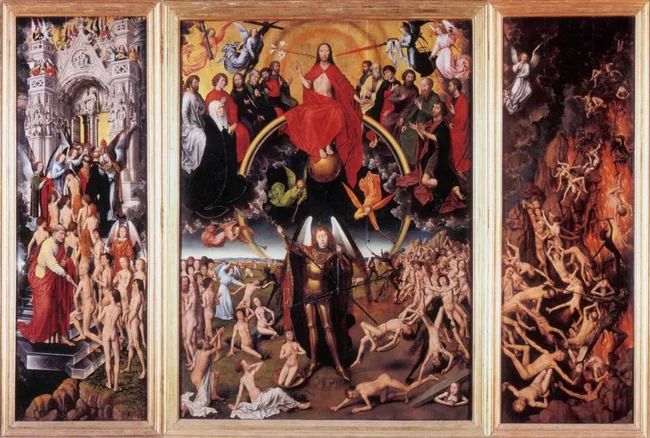
The Last Judgement Triptych

Community inventory

Christ judges humanity above Michael’s scales, while the wings separate salvation from damnation. Commissioned by Florentine banker Angelo Tani, the triptych never reached its intended chapel: Gdańsk privateers seized its ship in 1473, beginning the painting’s contested history of possession.

View catalogue entry

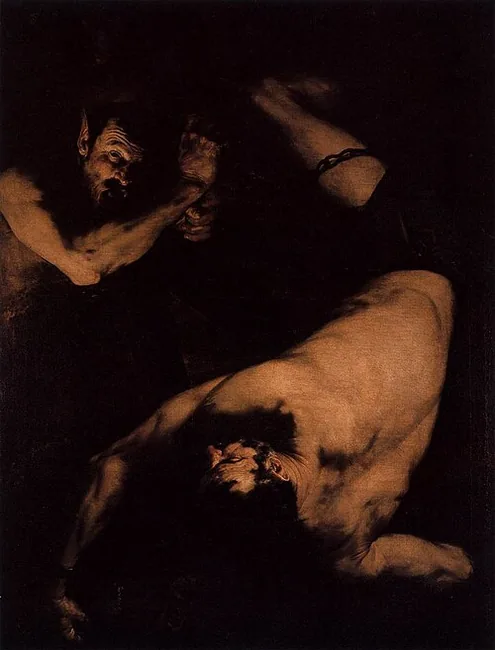
Ixion

Community inventory

Ixion suffers eternal punishment bound to a wheel after violating the gods’ hospitality and pursuing Juno. Ribera concentrates the myth in a strained, exposed body. Signed and dated 1632, the painting entered royal collections before joining the Prado in 1819.

View catalogue entry