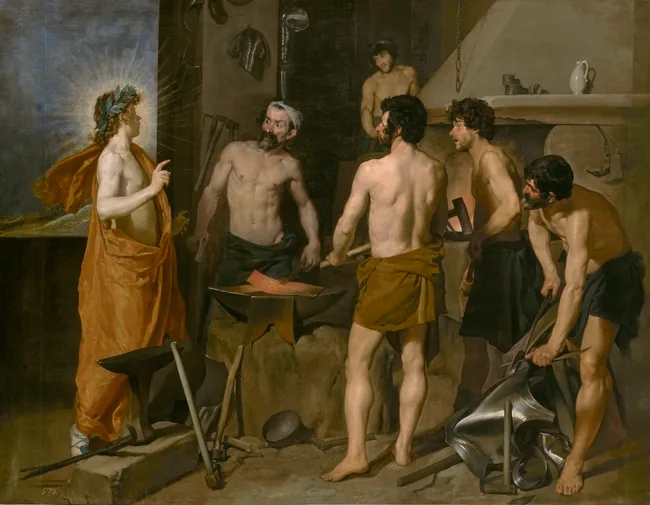
Vulcan's Forge (Apollo in the Forge of Vulcan)
Community inventoryApollo arrives to tell Vulcan that Venus has been unfaithful with Mars. A piece of information suddenly changes a roomful of working bodies into witnesses of betrayal.
Comparison · Works: 6
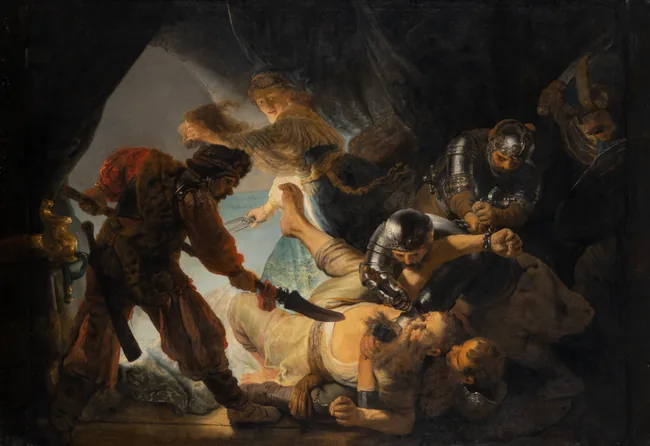
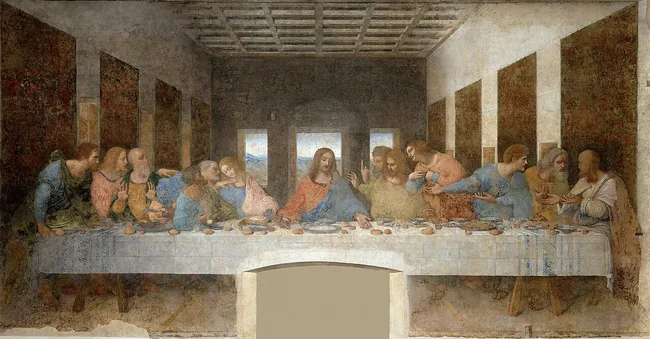
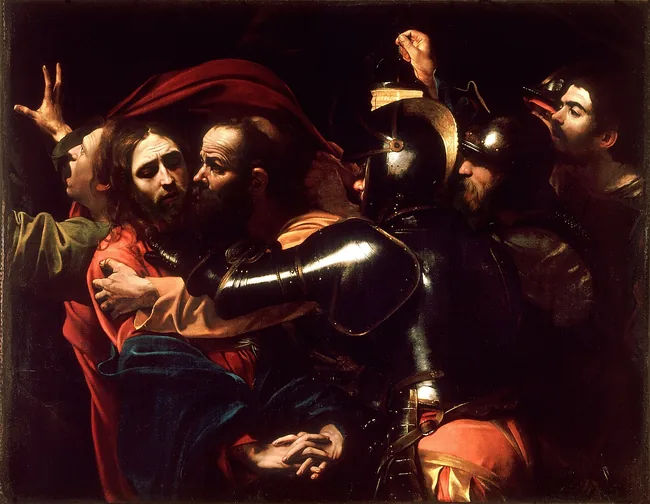
In Velázquez’s forge, news interrupts work. In Rembrandt’s Samson, a revealed secret destroys physical strength. Caravaggio’s Taking of Christ makes betrayal occur through a familiar gesture; Leonardo distributes the response to its announcement across a table.
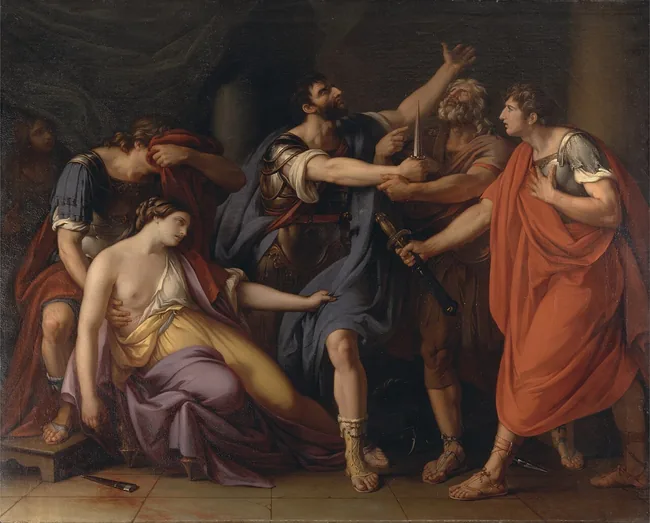
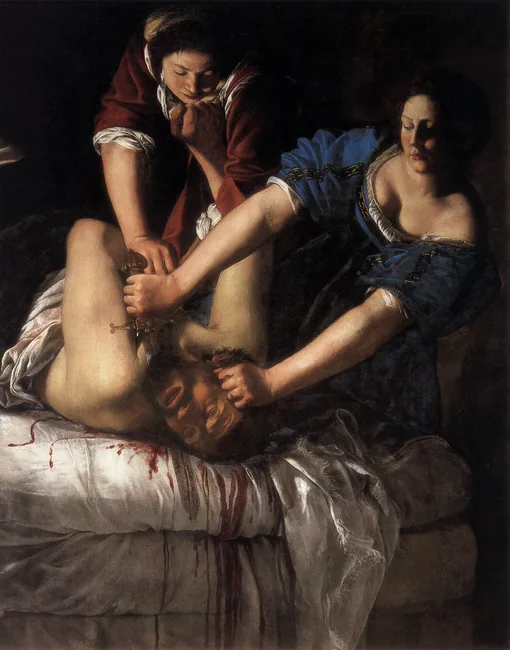
Artemisia’s Judith and Hamilton’s Lucretia introduce different acts of resistance and violence. They belong in the comparison because power changes hands around an exposed body, not because their narratives are identical. Look for who knows, who acts, and who is made to witness.
Apollo arrives to tell Vulcan that Venus has been unfaithful with Mars. A piece of information suddenly changes a roomful of working bodies into witnesses of betrayal.
Delilah has learned that Samson's strength depends on his uncut hair. The moment of physical domination exposes how a secret can undo apparently invincible strength.
Leonardo arranges the apostles’ reactions around Christ after the announcement of betrayal. Hands, glances and clustered bodies carry the drama. The game turns a wall painting into a framed image: its original architectural setting is part of what this reproduction leaves behind.
Judas’s identifying kiss and the soldier’s polished armour crowd Christ into a compressed night scene. Recognition becomes betrayal. The painting invites attention to gestures and proximity: intimacy, fear and organised violence coexist within a small area of illuminated flesh.
Lucretia’s death becomes the occasion for a political oath, joining private suffering to the overthrow of monarchy. Hamilton organises grief and action through classical gestures. The story concerns the expulsion of the Tarquins, so a reference to Caesar would be historically wrong.
Judith and her servant overpower Holofernes, whose army threatens their city. Their coordinated effort makes the biblical rescue forceful. This early Naples version precedes Gentileschi’s Florence painting; identifying its characters as portraits of the artist and her attacker remains speculative.