A painter from Delft
Johannes Vermeer (1632–1675) lived and worked in Delft. As well as painting, he dealt in works of art. Today he is often recognized by sparsely populated rooms with light entering from one side, but he arrived at that kind of picture through different genres. Some of his early paintings are religious subjects. His reputation also changed considerably over time. Widespread recognition came centuries after his death. Because relatively little is known about his life, the paintings offer a firmer route into his work than confident stories about his character.
One gesture, two rooms
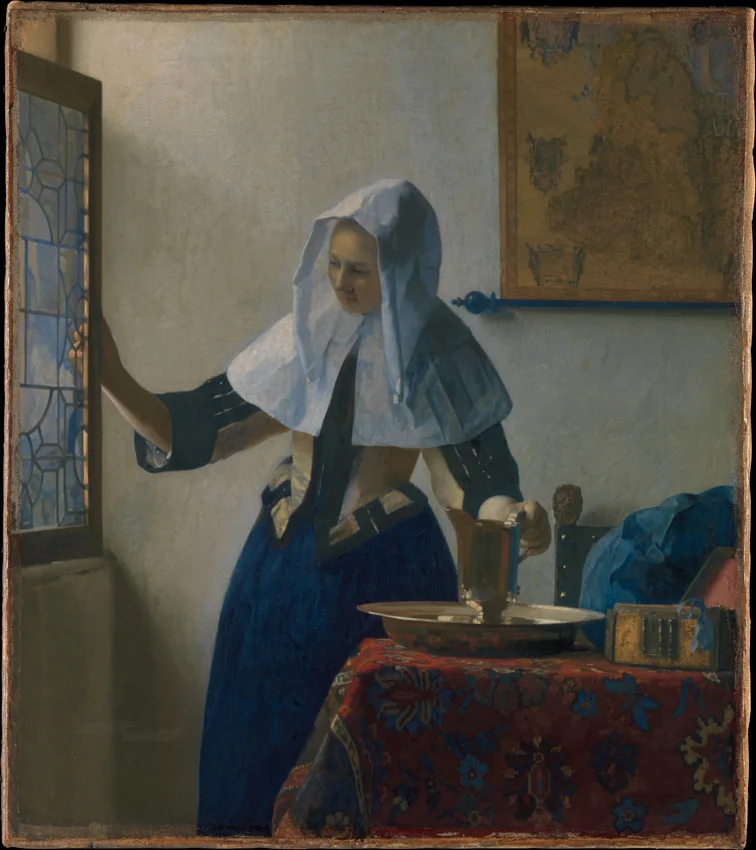
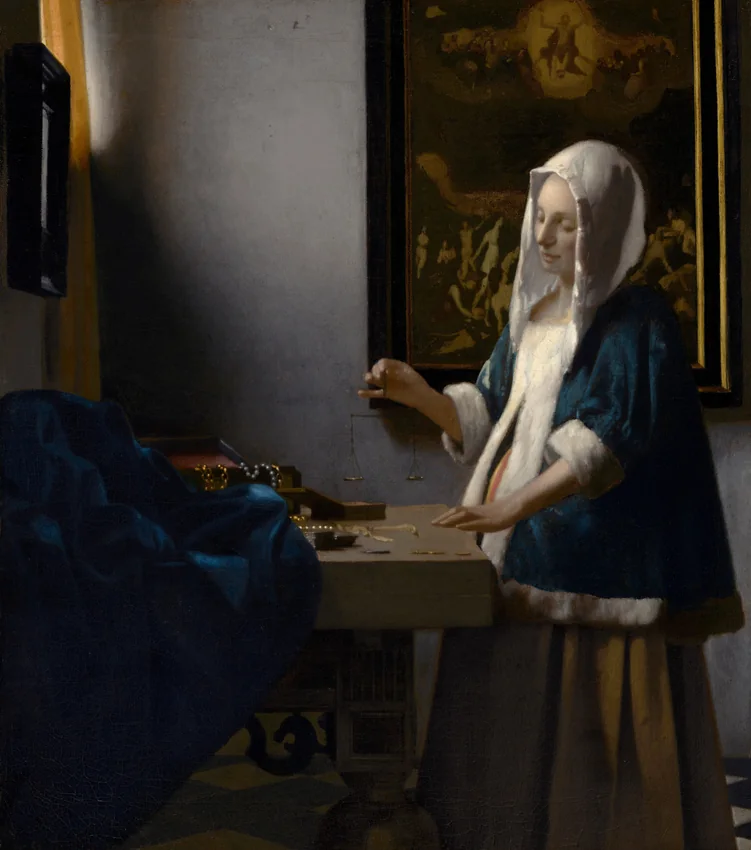
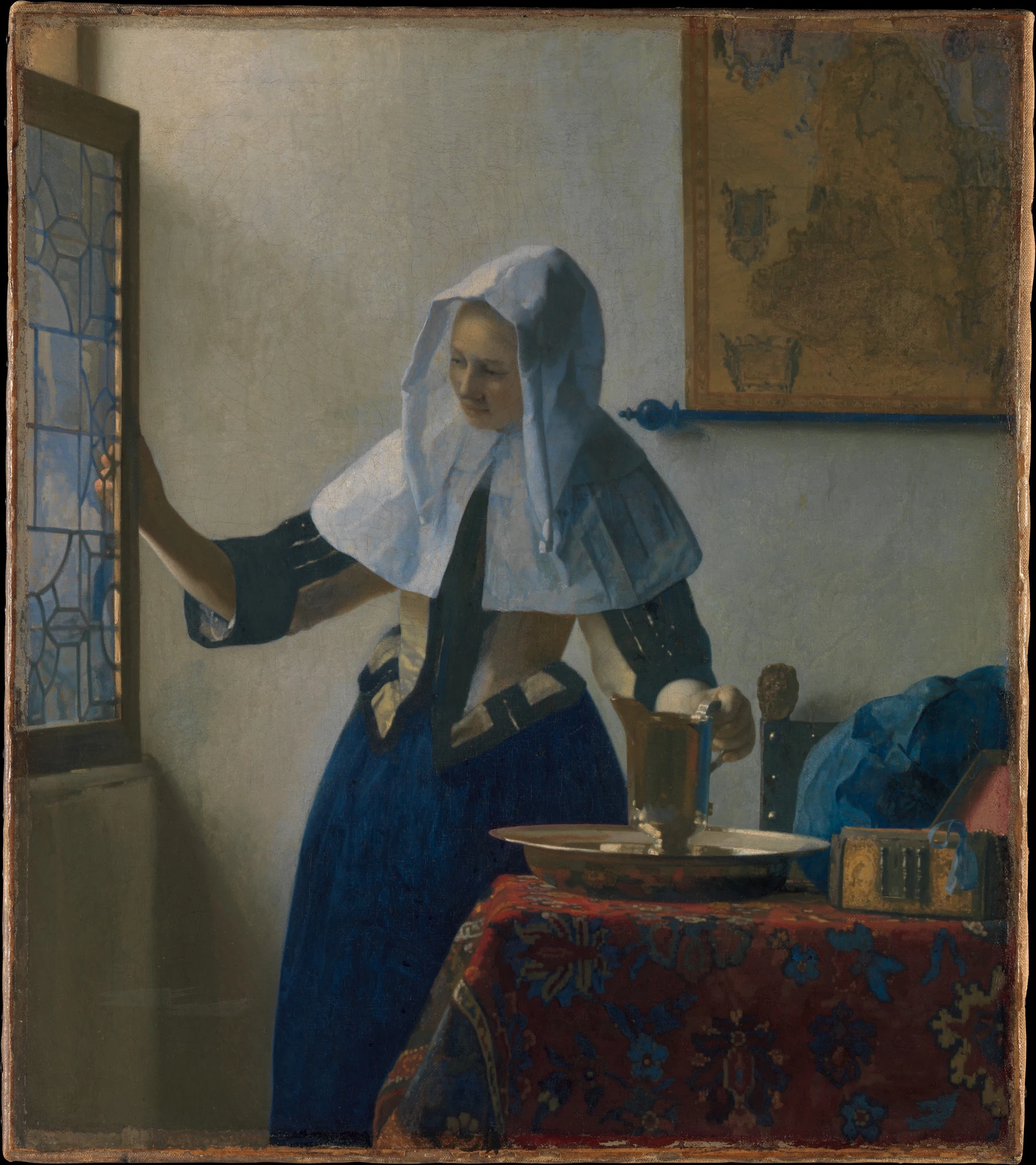
Set Young Woman with a Water Pitcher beside Woman Holding a Balance. In the first, the woman reaches toward objects on either side of her. In the second, her hands stay closer together, with the raised one suspending the pans above the table. Both paintings contain large areas where very little is depicted. Spend as much time there as you do on the face. See where a wall gives the hand room, where a frame stops it, and where a broad fold echoes a narrow shadow. Vermeer arranges the room so that a small difference in the position of a hand can change the path of the eye.
The work beneath the stillness
Research by the National Gallery of Art has revealed lively paint handling in the early stages of some of Vermeer’s works. In the finished Woman Holding a Balance, there is barely a sign that he changed the position of the central object. Comparing the visible surface with the technical findings adds a useful qualification to Vermeer’s reputation. A quiet scene makes it easy to forget the decisions that made it quiet. You can see something of that even without a laboratory. Look at how many shades there are in the white fabric in Young Woman with a Water Pitcher, and how few of them are apparent at a distance.
Sources
- National Gallery of Art, Washington · Who Is Vermeer?
- The Metropolitan Museum of Art · Johannes Vermeer (1632–1675)
- National Gallery of Art, Washington · Reconsidering Vermeer’s Perfectionism
- The Metropolitan Museum of Art · Young Woman with a Water Pitcher
- National Gallery of Art, Washington · Woman Holding a Balance