Why midtones matter
In painting, light and shadow describe the arrangement of light and dark tones that helps the viewer perceive volume and space. The National Gallery in London associates the related Italian term chiaroscuro with pronounced tonal contrast. Take a simple bend in a piece of cloth. When the transition from light to shadow runs across a broad band, the form feels gradual. When the shadow begins abruptly, there may be a sharp edge or one object casting a shadow on another. Midtones give the eye time to see how a surface turns before it leaves the light.
Light spreading through a room
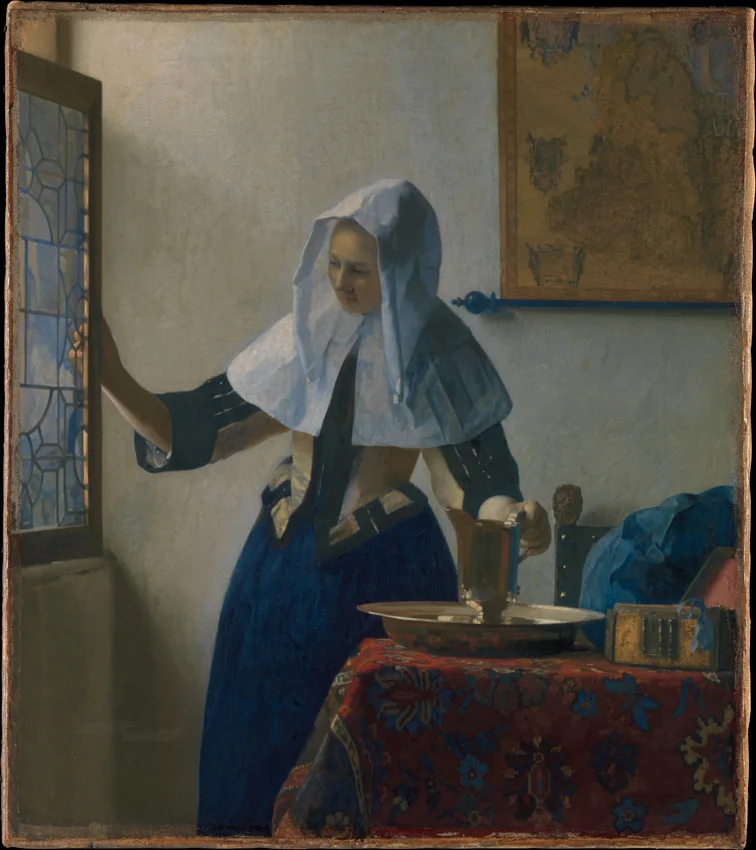
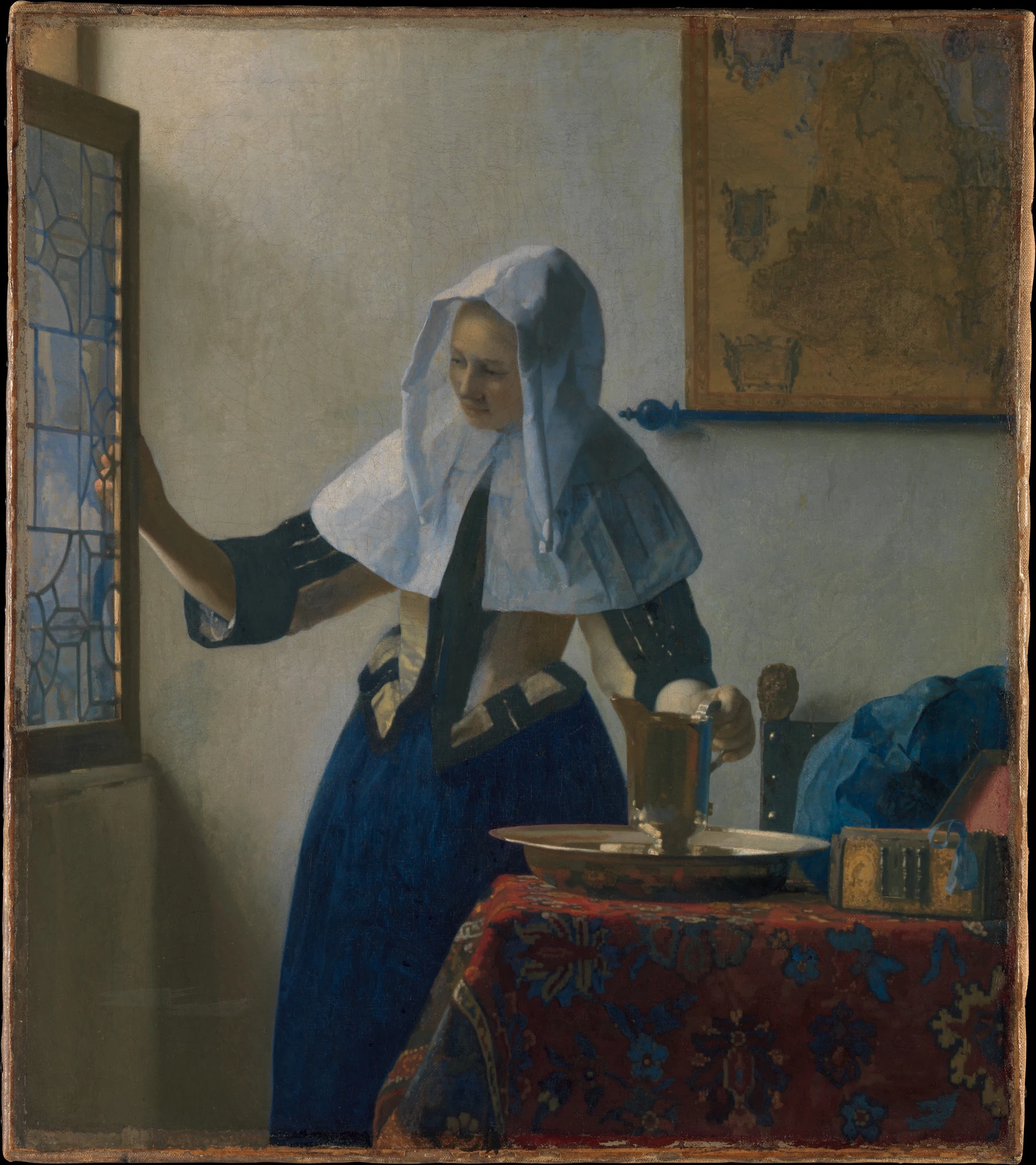
In Vermeer’s Young Woman with a Water Pitcher, part of the window is inside the picture. Light is visible on the white head covering and on the metal vessel. Compare the size and shape of these patches. On the fabric, transitions span entire folds. On the pitcher, the light gathers in narrow bands. Light distinguishes the properties of the two objects even where the color of either material is hard to name. Seen from farther away, the individual highlights disappear, but the relationship between the luminous figure and the wall holds.
Light concentrated on a face
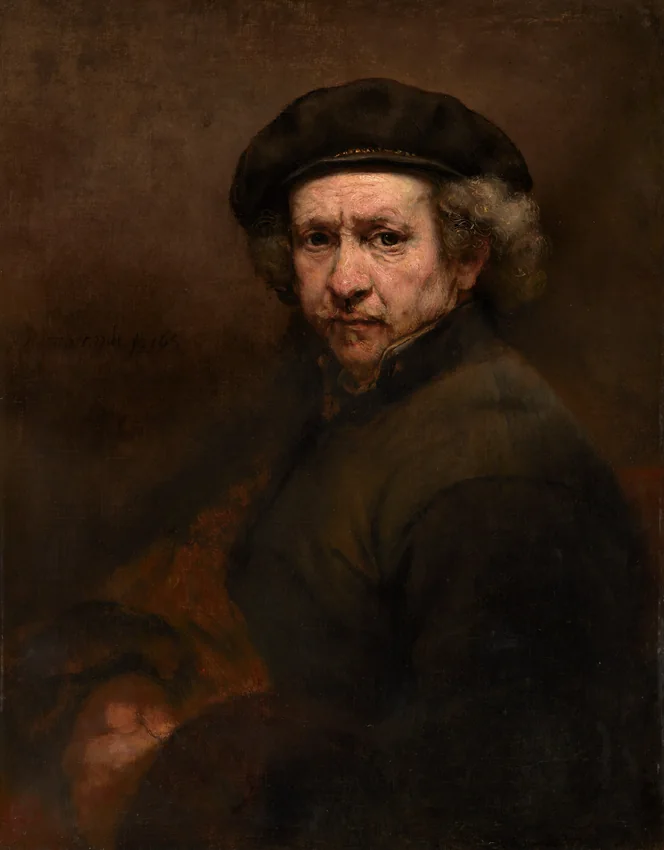
Rembrandt’s Self-Portrait of 1659 has no visible window. The light across the brow and one cheek stands apart from the dark areas around it, and the hands register mainly by their outline. Follow the image from the brightest part of the forehead down to the lower edge. On the way, both the tone and the amount of legible detail change. To test this for yourself, you can briefly turn both reproductions to grayscale. Vermeer and Rembrandt still differ in how light organizes the scene. Bring the color back and notice how a cool or warm cast changes your sense of the light while the distribution of lighter and darker areas stays the same.