From Leiden to Amsterdam
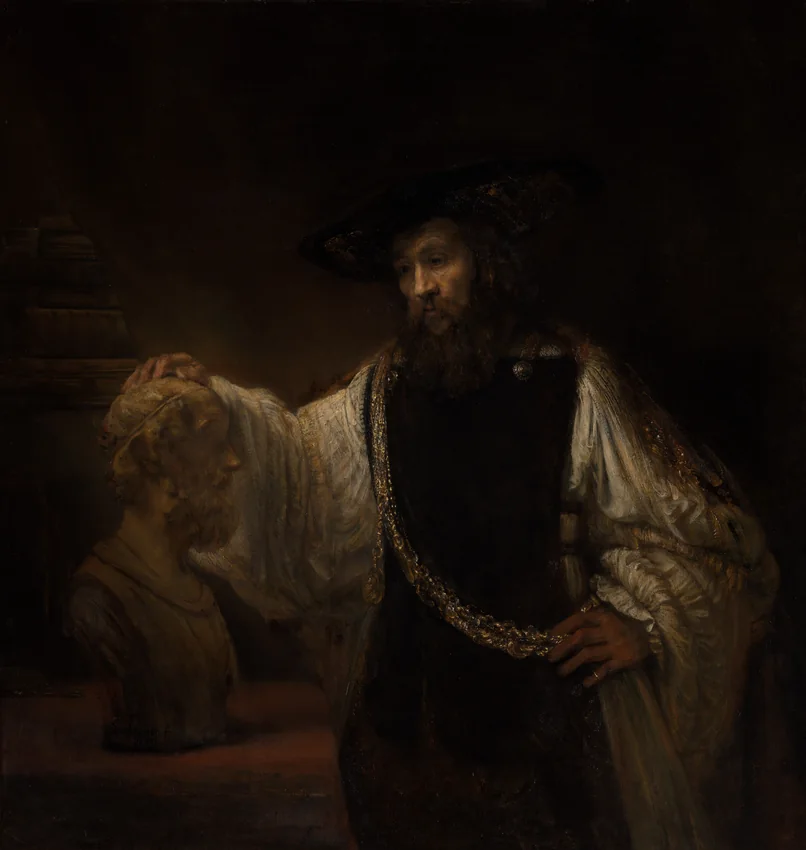
Rembrandt (1606–1669) was born in Leiden. His teachers included the Amsterdam painter Pieter Lastman. He made his name in Amsterdam as a portraitist and also painted historical and biblical scenes, made drawings, and etched prints. Two works from the 1650s make a good introduction to his painting. One imagines a meeting between an ancient philosopher and the image of a poet; the other shows the painter himself. For a moment, set aside which figure is invented and which is the artist’s own face. Compare how he handles the body in each.
Two ways to place a hand
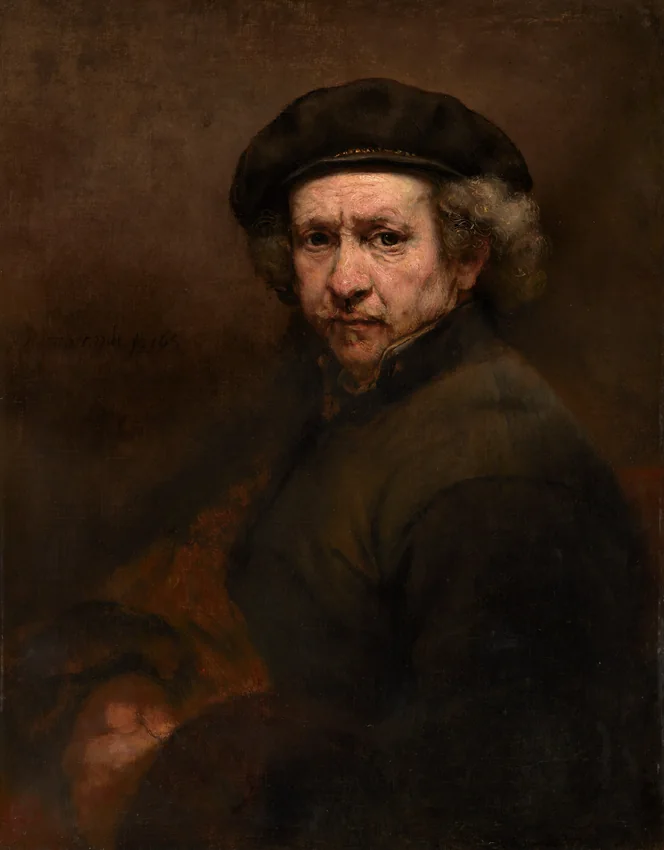
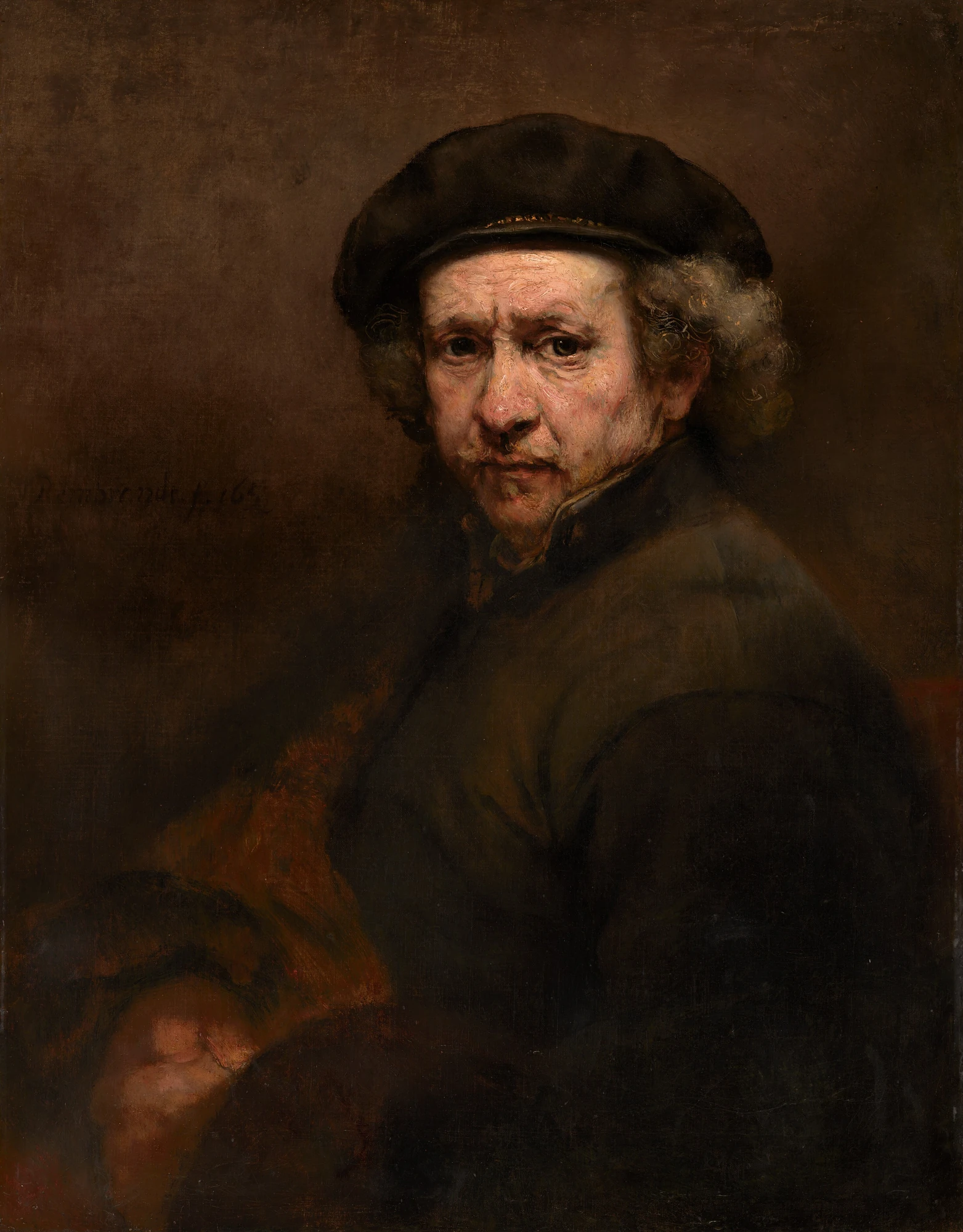
In Aristotle with a Bust of Homer, the hand stands out against the marble. That touch connects the philosopher to another person even though he is alone. In the Self-Portrait of 1659, the clasped hands retreat into darkness, and each return to the face turns up more brush marks. Start with the hands in both paintings. In the first, they lead you to the objects and open up the story. In the second, they steady the lower part of the portrait and leave the eyes to command your attention. One figure comes into focus through a visible touch, the other through an exchanged look.
What the paint can tell us
The National Gallery of Art describes how Rembrandt built up the illuminated parts of the face in the self-portrait with thick strokes and painted the hands and background much more thinly. Enlarge the image and look for the transition. It occurs in several places. A sharp edge sets off the collar, short strokes build up the cheek, and farther from the face the clothes almost disappear into the surroundings. Shrink the image again and a clear figure emerges from all these decisions. Only then is it apparent how much of the painting Rembrandt has left the viewer to fill in.
Sources
- National Gallery of Art, Washington · Rembrandt van Rijn
- The Metropolitan Museum of Art · Rembrandt (1606–1669): Paintings
- The Metropolitan Museum of Art · Aristotle with a Bust of Homer
- National Gallery of Art, Washington · Scholarly entry on Rembrandt’s Self-Portrait
Courtesy National Gallery of Art, Washington. Andrew W. Mellon Collection
CC0 1.0 · Museum record · Terms of use