Thickness as a tool
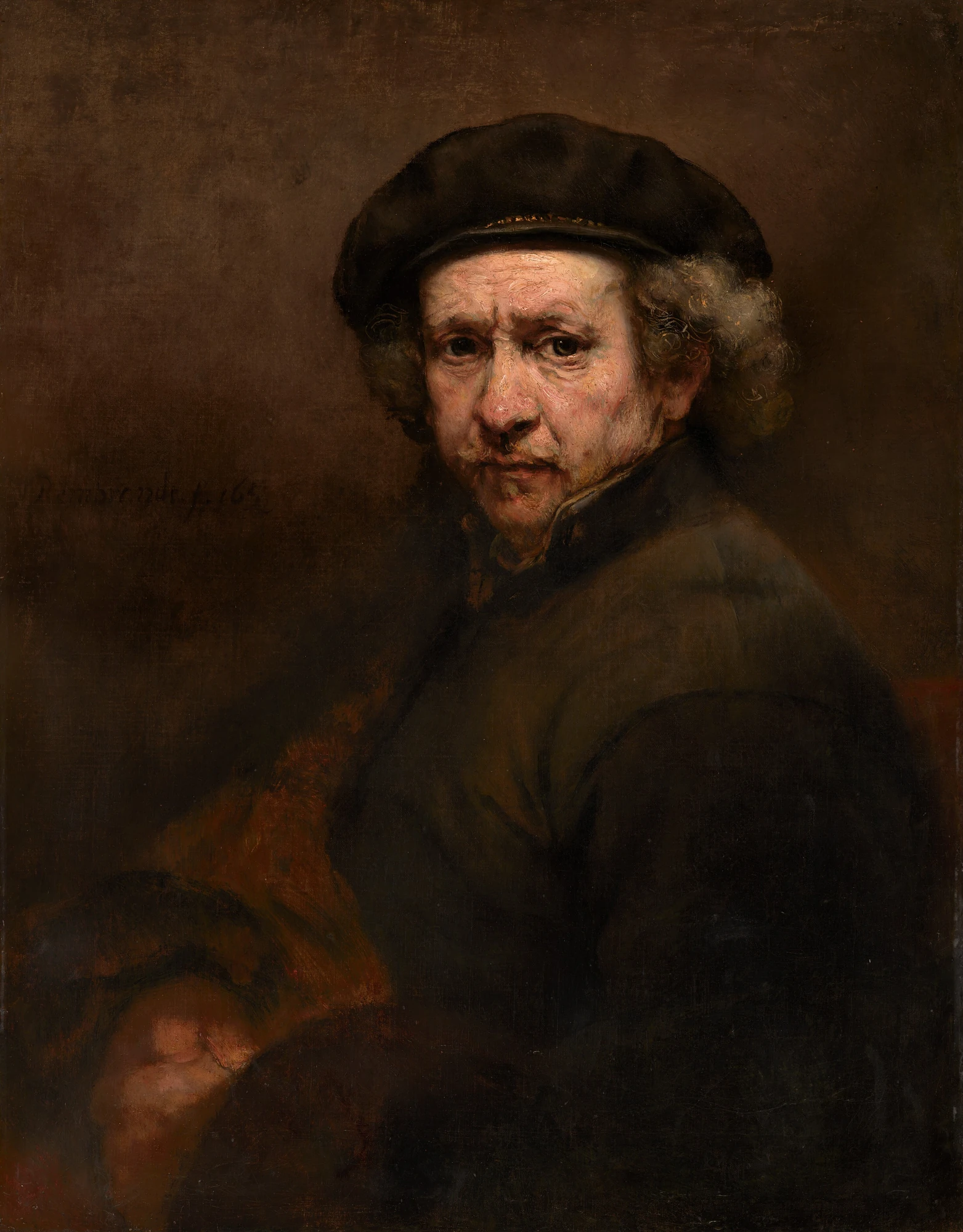
Impasto describes areas where the paint is applied thickly enough to form a noticeable relief. On the original canvas, ridges respond to light coming from the side. One catches the light and another casts a small shadow. On screen, you are seeing the result of a museum photograph taken under fixed lighting. A bright spot in the image gives little information on its own about how thick the paint is. Look for groups of strokes that show edges, ridges, and small shadows as well as color. They suggest a relief that technical examination can confirm.
An area the size of a cheek
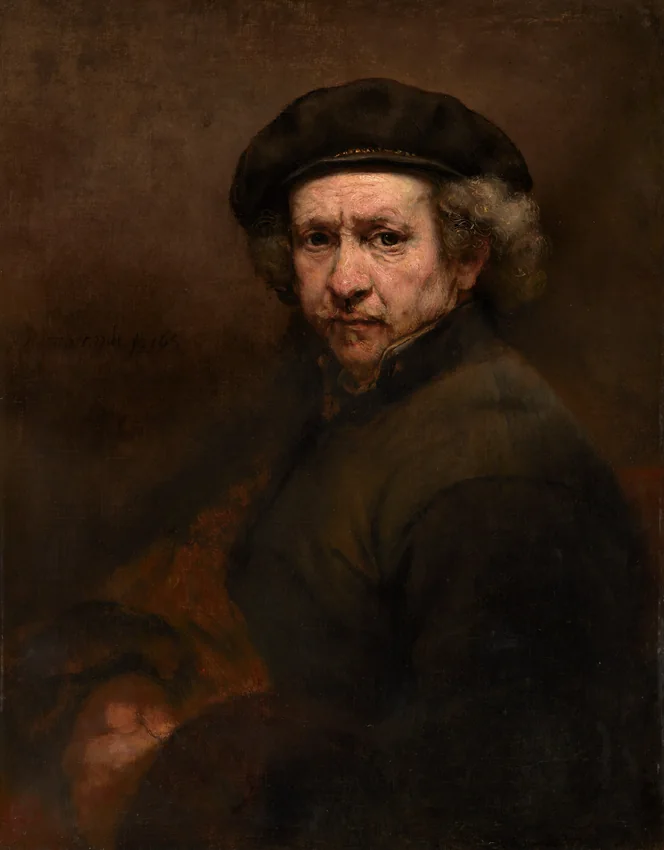
The National Gallery of Art describes the short, thick strokes Rembrandt used to build the lit areas of his 1659 Self-Portrait. Look at the cheek next to the nose, then move toward the side of the face. Enlarge the image to follow individual paths of the brush: a short contact, a turn, a stop. At a distance, the separate traces read as a rounded surface. Try going the other way. Find a bit of convincing volume in the small image, enlarge it, and see how different the neighboring strokes are that create it together.
What a highlight alone cannot tell you
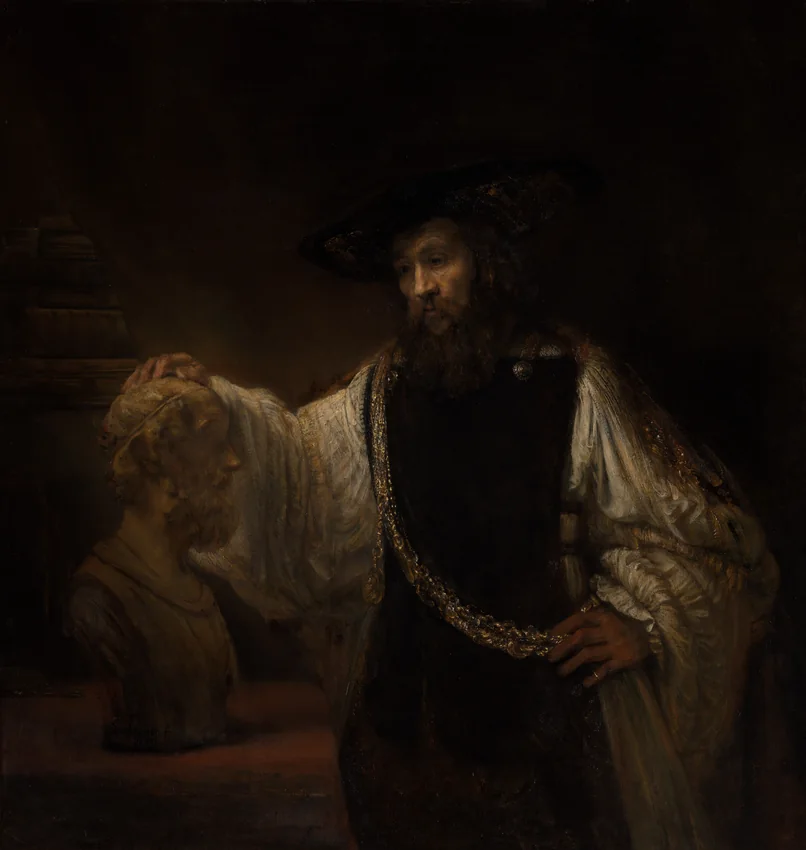
A curl below the beret may be visible because the painter dragged the handle of the brush through wet paint. A raised surface and an incised line leave different traces. Compare the hair to the illuminated forehead to see the distinction. Then look at Aristotle with a Bust of Homer and move from the gold chain to the marble. The chain breaks the light into glints; the light spreads more widely on the stone. It is easy here to confuse the texture of the depicted object with that of the actual painting. Ask whether you are seeing light on the object in the scene or a small shadow from a real brushstroke.
Sources
- The National Gallery, London · Impasto
- National Gallery of Art, Washington · Scholarly entry on Rembrandt’s Self-Portrait
- National Gallery of Art, Washington · Self-Portrait
- The Metropolitan Museum of Art · Aristotle with a Bust of Homer
Courtesy National Gallery of Art, Washington. Andrew W. Mellon Collection
CC0 1.0 · Museum record · Terms of use