Where the climb begins
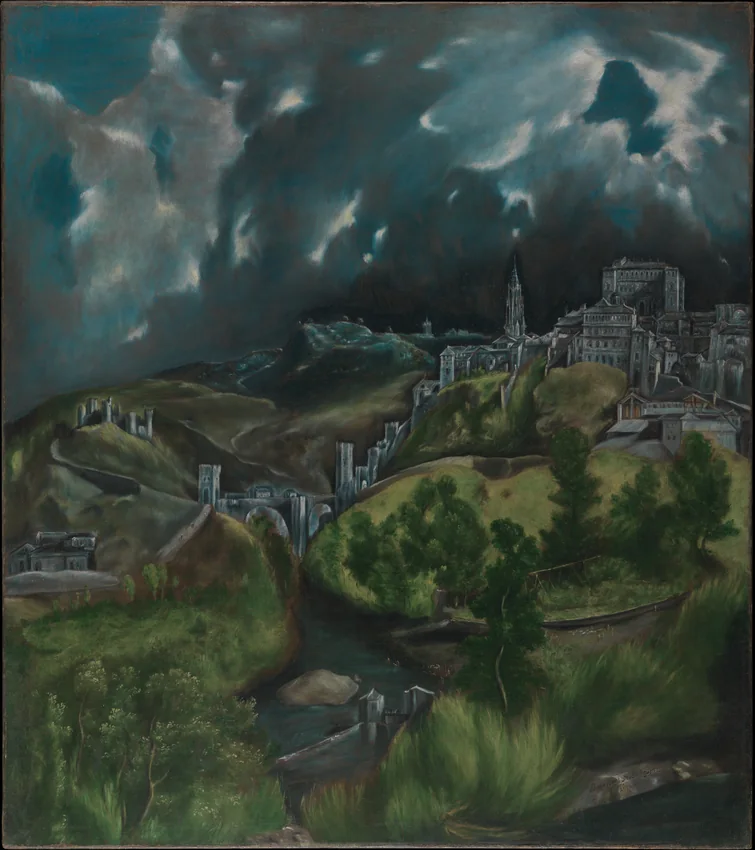
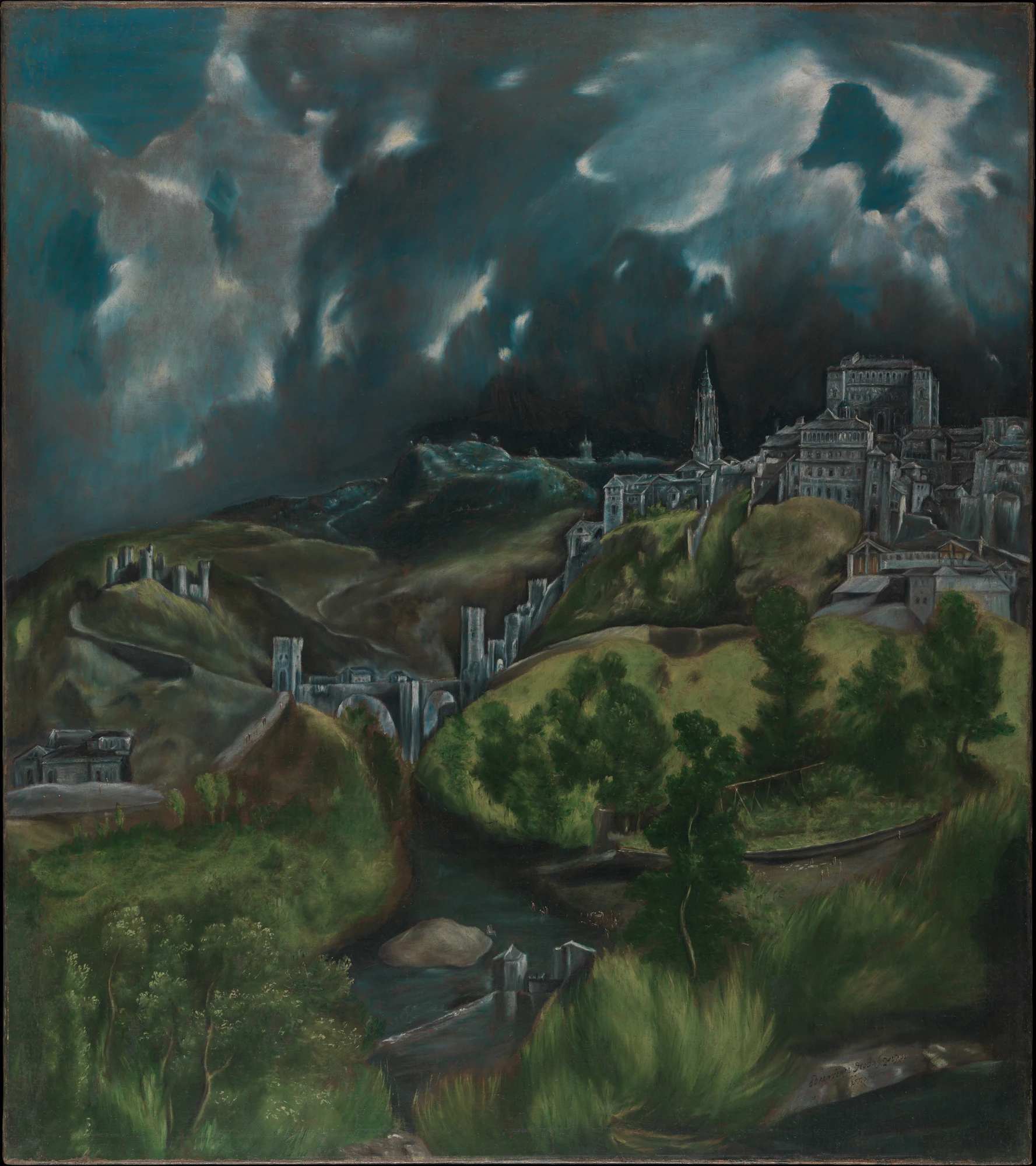
Start at the bottom of View of Toledo (ca. 1599–1600). The green terrain folds around a river and bridge. The eye climbs to the city, tries to settle on its pale walls, then goes up again into the clouds. Pay attention to the meeting of sky and buildings. The city has many straight, almost vertical lines, but none can hold the whole outline in place. Every time the eye finds an anchor in a tower or wall, a neighboring slope or cloud draws it away.
Freedom from the map
El Greco spent much of his life in Toledo. The painting includes recognizable buildings, but as the Metropolitan Museum of Art points out, he moved the cathedral from its actual position. Finding a single vantage point therefore cannot account for what the painting shows. Look at the distance between the cathedral tower and the mass of the Alcázar. A series of shapes of different heights fits between them. Narrow that interval in your mind and the two buildings would merge into a single heavy silhouette. The climb from the city to the clouds would feel different.
Where does all the light come from?
The sky suggests a storm, but the painting makes it hard to pinpoint where all the light comes from. Vivid green areas sit alongside pale embankments and very dark clouds. Try following the places where colors meet instead of working out where a shadow would fall at any given minute. Your eye catches on the bright edge of a building and jumps to a distant slope. On a second look, the same spot may feel near or far depending on how your eye arrived there.
Sources
- The Metropolitan Museum of Art · View of Toledo
- Metropolitan Museum Journal · Three Paintings by El Greco
- The Metropolitan Museum of Art · El Greco (1541–1614)
H. O. Havemeyer Collection, Bequest of Mrs. H. O. Havemeyer, 1929
CC0 1.0 · Museum record · Terms of use